Review: The Samurai and the Prisoner (2026)
Who is the samurai and who is the prisoner referred to in the title of Kiyoshi Kurosawa’s latest, The Samurai and the Prisoner? The answer might surprise you, as will many of the narrative turns and thematic explorations of this whodunnit set in late 16th-century feudal Japan. The period and mystery approach is new for Kurosawa, who is best known for his psychological thrillers and horror films set in modern-day Japan, including Cure (1997), Pulse (2001), and most recently Cloud (2024). But The Samurai and the Prisoner is assuredly a Kurosawa film, with the same intelligent analysis of human behaviour and clockwork formal precision we’d expect of the Japanese master. Nevertheless, it is surprising, in more ways than one.
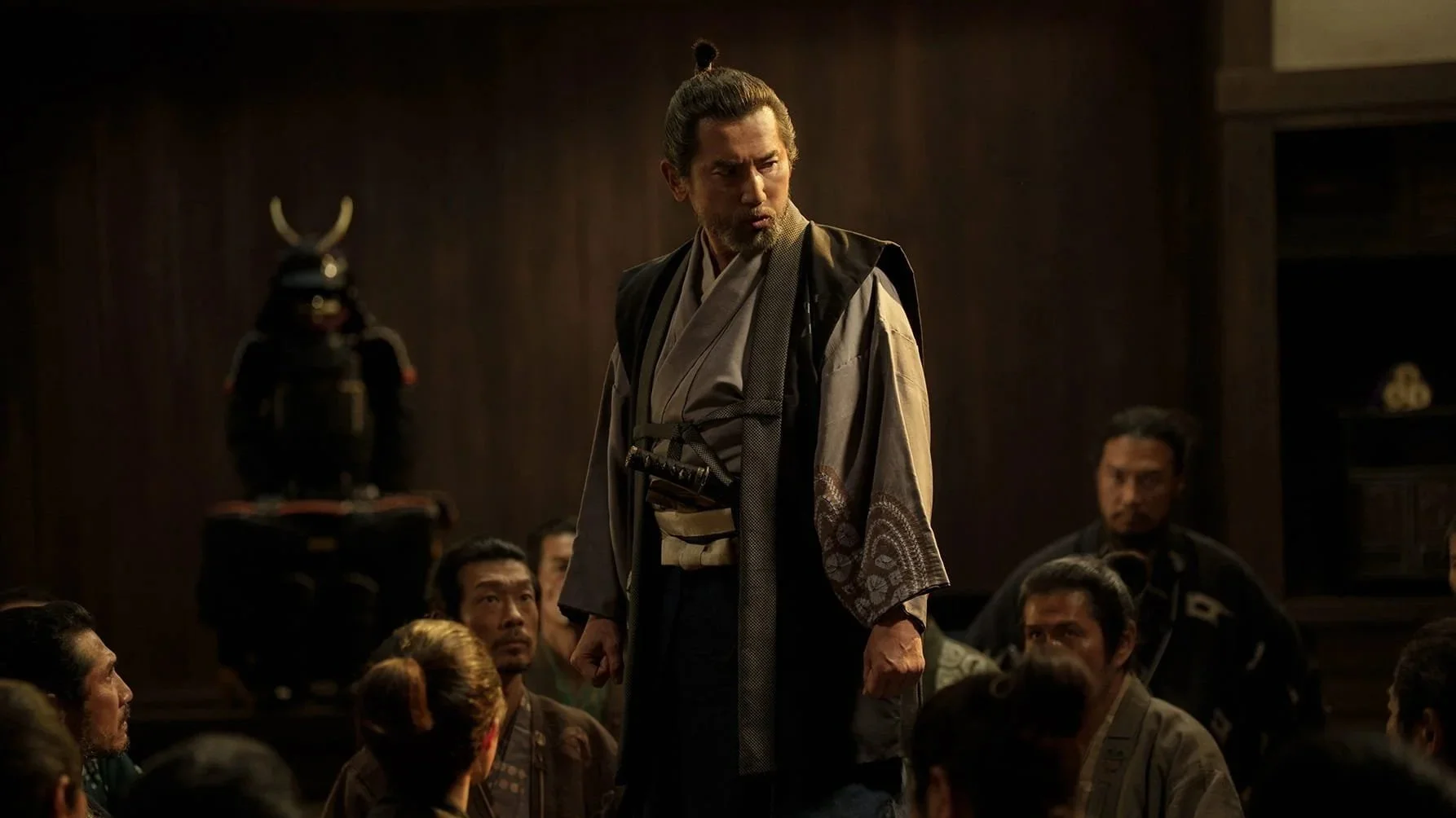
Based on the novel by Honobu Yonezawa and taking inspiration from the films of Kenji Mizoguchi and Akira Kurosawa (no relation), The Samurai and the Prisoner takes us into the corridors of Arioka Castle, where the lord Murashige Araki (Masahiro Motoki) withstands the siege of the warlord Nobunaga Oda. The odds are against Murashige, but he’s committed to holding up through the seasons and keeping his men focused until he can strategize a way to break Oda’s siege.
Murashige is ostensibly the samurai of the title, the heroic and merciful ruler who inspires his men and even spares the lives of his enemies, breaking samurai custom to do so. One of these men is Kanbei Kuroda (Masaki Suda), an envoy from Oda whom Murashige imprisons in the dungeon rather than sending back to his enemy or, as is the custom, executing him and presenting his decapitated head as a warning. He becomes the literal prisoner referred to in the title.
The early scene where Murashige imprisons Kanbei but refuses to execute him begins the film’s fascinating exploration of Japanese feudal customs, particularly the interplay of honour and death within samurai culture. Unlike nearly all his adversaries and allies, Murashige sees no worth in following customs in order to save face or adhere to tradition. He dislikes death and believes every execution makes him more like the cruel Oda, who we only ever see in a single flashback ruthlessly executing women. He wants to prove he’s not like Oda, so he is merciful and spares Kanbei as well as hostages and others found guilty of treason. But what he believes is mercy is not perceived as merciful within the broader culture.
In the aftermath of Murashige’s merciful act towards Kanbei, odd deaths begin occurring around the castle. First, a child hostage is found killed in his room, shot in the back through a three-inch opening in the door. Later, a decapitated head is seemingly disfigured after death despite being placed in a sealed box. Then a man is struck by lightning at the same time he’s shot by a gun. Each episode occurs in a different season, conveyed through title cards, showing the long siege and extensive series of seemingly random, perhaps even divine, occurrences haunting the castle.
Murashige investigates each mysterious death, using the imprisoned Kanbei as his sounding board for theorizing, as Kanbei is renowned for his strategic acumen. He also converses with his devout Buddhist wife, Chiyoho (Yuriko Yoshitaka), who seeks to spur the people of the castle to a newfound piety in light of the siege. Thus, in spite of its Japanese pedigree, The Samurai and the Prisoner is very much a whodunnit in the vein of Agatha Christie. It mostly consists of investigations and conversations in quiet parlours and salons, albeit ones in a 16th-century Japanese castle. And like all good whodunnits, the investigation into mysterious deaths becomes an investigation into the soul of the man doing the investigating, an interrogation of his situation in this siege and his own place within the rigid samurai culture.
As suggested by the title, the conversations between Murashige and Kanbei are the crux of the film. Both men are intelligent, capable, but at odds with each other both strategically and philosophically. Their conversations shift from early sparring matches to entreaties and later even strategic breakthroughs where you glimpse the promise of what would be possible if these men worked together. The men also demonstrate the film’s obsession with honour and how it’s envisioned in differing ways by these men, who represent polar opposite approaches to the culture. Murashige is endlessly pragmatic and iconoclastic. He doesn’t care about divine punishments or striking fear in his enemies. He abhors death for death’s sake. But he also overlooks the consequences of his actions, how keeping Kanbei alive means certain death for Kanbei’s son, for instance, who is Oda’s hostage, or how his act of mercy shames a powerful man like Kanbei, who values honour over life.
Both men are excellent in their roles and these conversations pulse with energy despite how deceptively quiet they are. Masahiro Motoki is disarmingly transparent and emotional as Murashige. He carries an air of authority and confidence in how he stands and speaks, but there’s no pride in his performance. When he’s upset, he lets his men know he’s upset. When he’s baffled, he expresses it. He disregards tradition but he’s not contemptuous of it, rather, simply saddened by its burdens. Masaki Suda, on the other hand, leans into the enigmatic scheming we expect of a samurai lord in his performance as Kanbei. His matinee model good looks hide the character's maturity and cunning, and even leads Murashige to let his guard down. But behind those big eyes is a cold intellect that dissects these mysteries and plots ways for Murashige to defeat his enemies, all without ever seeing the murder scenes or battlefields he’s commenting upon. Kurosawa never references modern pop-culture villains, but there’s a bit of Magneto or the Joker or Silva to Kanbei, as they all seem most dangerous to the heroes when they’re seemingly most vulnerable.
That said, Kanbei is not a conventional villain and Murashige is not a conventional hero. In fact, they might not even be who the title suggests they are. Kanbei is imprisoned, but he embodies the samurai sensibilities more than Murashige. Murashige is the samurai lord, but he’s a prisoner in his castle, and bristles at the chains of tradition and customs and expectation. The man outside the prison cell seems to yearn for freedom more than the other.
In The Samurai and the Prisoner, Kurosawa is obsessed with duality and division, both internal and external. His camera captures the intellectual process of the men it follows, constantly tracking left or right at a crawl or subtly racking focus to pull our attention as new ideas spring to the characters’ minds. In contrast to almost all contemporary films, Kurosawa also crafts clear blocking in his scenes, withholding cuts so that his characters can move throughout the room in unbroken takes and their placement in the frame can emphasize the shifting divisions and power struggles between them. There’s likely no better encapsulation of this penchant for blocking than the climactic conversation between Murashige and his wife, where they move around a large hall only for him to end up facing the camera in closeup and her to end up framed behind him on the right, essentially sitting on his shoulder like an angel, speaking into his ear, filling his mind with all these divine delusions.
Due to its lower budget and relatively modest interests, The Samurai and the Prisoner never gives us the big battles or siege scenes you might expect from such material. It’s similar to season one of Shogun or Game of Thrones in this way, more interested in throne room verbal sparring than battlefield combat. But despite the modest on screen action, the film is still riveting, not only for the mysteries of the narrative but also for the intelligence of the characters and, by extension, the filmmaker behind it all.
8 out of 10
The Samurai and the Prisoner (2026, Japan)
Directed by Kiyoshi Kurosawa; written by Kiyoshi Kurosawa, based on the novel by Honobu Yonezawa; starring Masahiro Motoki, Masaki Suda, Yuriko Yoshitaka, Munetaka Aoki.
Read More Reviews

Matt Bettinelli-Olpin and Tyler Gillett’s action horror sequel is a mere reheat.