Review: Wildwood (2026)
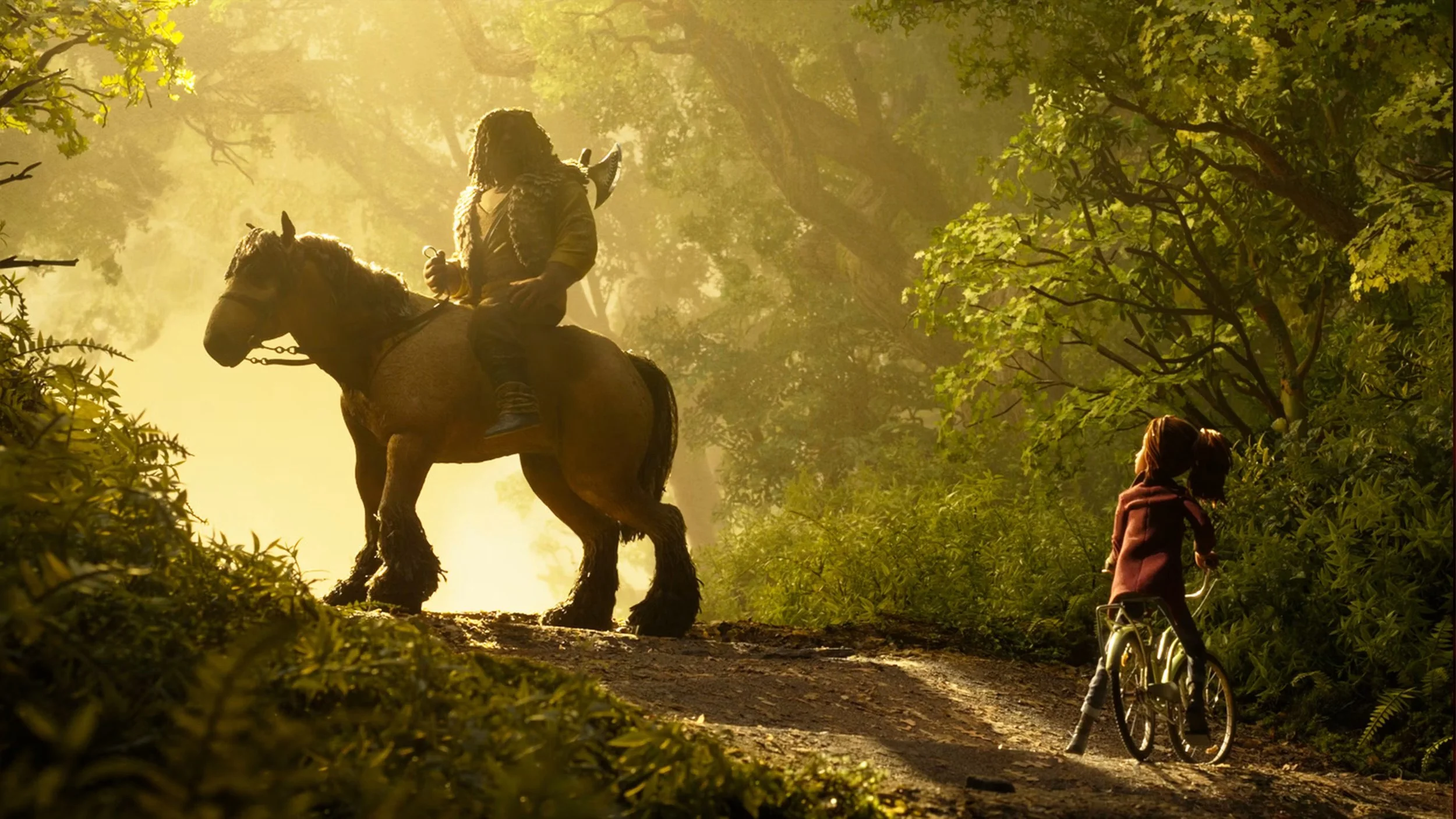
What is the power of beauty? In our world, which is obsessed with physical appearance, you’d think that beauty evidently counts for a lot. But is beauty simply the aesthetic appeal of something’s physical appearance? I contend that true beauty is something deeper and more ineffable. Beauty is not only aesthetic appeal, but also unvarnished being and the grace that comes with balance and truth. I’m reminded of how in Ursula K. Le Guin’s masterful Earthsea series the most powerful thing in the world is a person’s true name, which they keep secret, since speaking it can have such an enormous sway over the physical world. That’s what true beauty is like: overwhelming and awesome, but also potentially dangerous. Perhaps it’s why few things capture the essence of beauty like a mighty forest. True to its name, Travis Knight’s Wildwood builds its cinematic impact on its staggering beauty. It is not only a beautiful film, but even if it were merely that, it is so much more beautiful than most pictures that it would still be marvellous.
The latest stop-motion film from Laika, the Portland-based production company that gave us Coraline (2009) and Kubo and the Two Strings (2016), Wildwood is a defiantly hand-made work in an age of computerization and AI generated imagery. Knight began preproduction on the film 15 years ago and started filming over five years ago. When you see the detail of the miniature work, and the scale of the film’s sequences, set in Portland and in the magical woods surrounding the Oregonian city, you’ll understand why it took so long. Wildwood takes your breath away with its unparalleled craft. It is simply the most visually complex stop-motion film ever made. Characters not only fly eagles high above the forest, race through towns after murmuring flocks of crows, and do battle against armies of coyote soldiers wearing redcoats and armed with muskets. They also bleed and breathe, the latter the result of a new puppet made by Laika that allows air to pulse in and out of a bellows within the puppet’s chest to simulate breath. This is a film where no visual detail is overlooked, and it’s remarkable to witness.
However, if Wildwood were only nice to look at, it would still be a good film, but not a great one. Luckily, Wildwood is a captivating fantasy epic, where a stubborn adolescent, Prue (Peyton Elizabeth Lee), has to enter the magical woods surrounding Portland to rescue her infant brother, Mac (Arthur Knight), who was kidnapped by a murder of crows. Turns out a magical woman known as the Dowager Governess (Carey Mulligan) wants Mac for a blood ritual to bring back her own deceased son. Prue has to rescue Mac before the Dowager Governess can complete her ritual and so contends with the complex interplay between the citizens of the forest, which include the bureaucratic merchants of South Wood, the talking birds of the Avian Principality, the mystics and farmers of North Wood, and the bandits who live deep in the forest.
Like The Wizard of Oz (1939) and other stories about an ordinary girl dropped into an extraordinary realm, Wildwood overwhelms with the dense details of its storyworld. We learn about the realm as Prue does, about the political factions, the dangers posed by the Dowager Governess, and the possibilities of magic throughout the woods. Based on the novel by Decemberists’ frontman Colin Meloy, the film has a lot of lore, and can be a lot to take in, so if there’s a downside to Wildwood, it’s that it’s as dense as the woods themselves. Luckily, just as Prue doesn’t need to understand everything about the woods, but just enough to navigate through them, the viewer doesn’t need to worry about every little detail. Like with Studio Ghibli films such as Howl’s Moving Castle (2004) or The Boy and the Heron (2023), it’s best to just roll with the worldbuilding as it unfolds in Wildwood. Just as in those films, the emotional experience of the protagonist offers us a compelling guide, like a lantern in the dark woods at night.
Just like past Laika protagonists such as Coraline and Kubo, Prue is a complex character. She’s stubborn and independent. In the opening scene, she deliberately ignores her parents’ commands to keep Mac inside while they’re gone, instead taking him out to venture around town in a wagon attached to her bike. It’s this very stubbornness that leads to Mac’s abduction in a chilling sequence where Mac climbs a playground slide and is soon surrounded by hundreds of crows alighting on the jungle gym around him (a clear reference to Alfred Hitchcock’s The Birds). By the time Prue realizes what’s happening, the crows swarm and grab the child, flying him into the woods. Prue gives chase alongside her classmate, the nerdy Curtis (Jacob Tremblay), but she cannot catch the crows as they pass into the fog-laden forest on the other side of the suspension bridge outside town. Fortunately, Prue’s stubbornness also leads her to endure and search for her brother, facing down the fantastical threats of the forest, but also pushing through the factional conflict that keeps the forest residents from confronting the Dowager Governess. Like many great protagonists, she needs to be humbled, but has all the characteristics necessary to become a hero.
Good fantasy stories need compelling villains as well as protagonists, and the Dowager Governess is a fascinating one. We learn that she used to be the benevolent ruler of South Wood but when her son tragically died, she became obsessed with black magic that was capable of resurrecting him. However, she could never find his body in the forest, and so built an automaton and used magic to bind his soul into the artificial body. However, when the resurrected child realized that he was no longer human but trapped inside a machine, he killed himself. Blinded by her grief, she needs the blood of a child to take control of the forest, find her son’s body, and reanimate him properly this time. The Dowager Governess does all the wrong things for all the right reasons, a loving mother distorted into a child killer. Her desperation provides an urgency that fuels the narrative, and plays into the darker themes that pervade many Laika films.
The scenario also creates a lot of tension and emotion. There’s a race against time element that keeps the pace moving, even though Wildwood is the longest stop-motion movie ever at 132 minutes. The fear of loss animates both hero and villain, creating a compelling dramatic tension, and the potent life and death stakes keep the film unpredictable. Characters die. Battles are fought. Everything doesn’t wrap up with a lesson learned; there are consequences to the actions we’ve witnessed.
The film’s emotional secret weapon, though, is Knight’s casting of his own infant son as the voice of Mac. A bubbly blond boy with blue eyes and an infectious giggle (he looks and sounds very much like my own infant son), Mac toddles around and coos half-formed words, such as Prue, which sounds like “poo,” or cries due to separation or fear. The decision to have an actual infant voice Mac gives a living essence to these figurines and their fantastical story. It’s like the final ingredient in a spell necessary to bring them to life. Because it’s one thing to be told that a child is in danger. It’s another thing to hear his cries, the real cries of an infant, and watch hand-made figurines move across a tangible set, and to feel that the danger is real. Wildwood achieves that striking verisimilitude.
The film is also ripe for thematic interpretation with many themes that speak to our present moment. The Dowager Governess’s quest to reanimate her dead son showcases the dangers and inhuman hubris of transhumanism. In fact, the entire film, with its hand-made, human-informed craftsmanship, is a rebuke to AI slop and the notion that a machine can create something beautiful. Subplots involving Prue and Mac’s parents explore the notion of the sacrifice required of parenting in the modern world, and even the anguish of in vitro fertilization (IVF) for parents who struggle to conceive. A lesson delivered late in the film from a mystic played by Tantoo Cardinal comments on the need for balance in the natural world, but also the extreme danger that nature poses when that balance is not struck and it lashes out at humanity.
There’s so much to uncover in Wildwood, so much meaning in its dense quest narrative, so much emotion in its pull between a girl and a woman both torn apart by loss. It’s a film of genuine beauty, startling to look at, but more importantly, true in what it expresses about its world and our own. It’s a deep, beautiful forest worth exploring to the full.
9 out of 10
Wildwood (2026, USA)
Directed by Travis Knight; written by Chris Butler, based on the novel by Colin Meloy and Carson Ellis; starring Carey Mulligan, Peyton Elizabeth Lee, Jacob Tremblay, Richard E. Grant, Awkwafina, Amandla Stenberg, Tom Waits, Charlie Day, Blythe Danner, Arthur Knight, Angela Bassett, Mahershala Ali.

Read More Reviews
Laika’s latest fantasy epic is a defiantly handmade marvel in an age of automation.