Remembering Patrick Stewart (1940-2026)
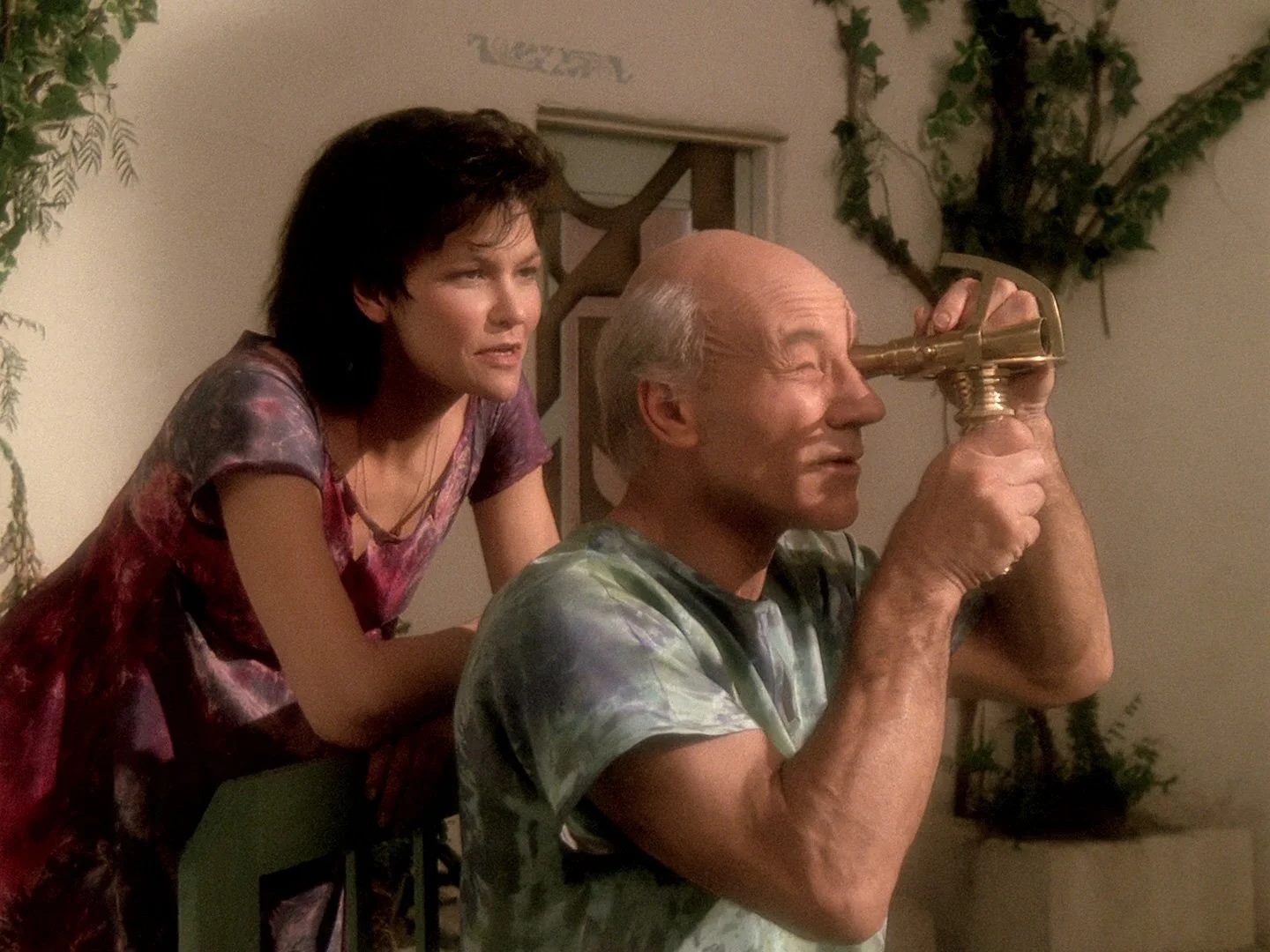
Anton: Few actors get to become so fully a character and thus become iconic. Patrick Stewart got to do that twice, arguably. First as Captain Jean-Luc Picard in the TV show Star Trek: The Next Generation and its several movies. After William Shatner’s famous performances as Captain James T. Kirk, there were doubts you could have another memorable Star Trek captain, but Stewart did so with Picard by making his captain a very different character—one marked by his high moral standards and Renaissance man characteristics. Second, Stewart became Professor X, Charles Francis Xavier, in the X-Men movies. As Anders mentioned in our recent newsletter, it was one of those times when a movie gave us the casting that most of us had already in mind when we were imagining the X-Men on film in the 90s. Again, the character was marked by his capability and wisdom. Stewart's gravitas on screen made him excel at these kinds of roles, but it certainly wasn’t the only kind of role he played. Stewart was far more than just a figure of fandom.
Aren: I saw many clips going around social platforms in the wake of Patrick Stewart’s death. Usually, I hate being served clips, but on this occasion, I was happy to see any and all footage of Stewart being charming over the years. Two clips, which I’ve seen many times before, stood out. The first is his vigorous introduction of Salt-N-Pepa when he hosted Saturday Night Live in 1994. He delivers the templated introduction, “Ladies and gentlemen, BAND NAME,” with such gusto, it’s infectious. He didn’t treat that part of the gig as beneath him—unlike another famous Brit, Daniel Craig, who famously introduced the Weeknd with such anguish that it’s become its own meme.
The other clip is his appearance on Sesame Street from 1996. Riffing on his work as a Shakespearean actor, Stewart performs a variation of the “To be or not to be” speech from Hamlet, although this time it’s about “B or not a B” as he tries to help children learn the letter B. His performance is so committed to such an absurd, childish thing. Stewart takes it as seriously as if he were performing the original soliloquy. It’s delightful precisely because it’s not pandering, not winking, not ironic at all. It’s sincere. It embodies so much of what I loved about Stewart, and what I’ll miss.
Stewart was a professional, no matter the performance, no matter the setting, no matter the words coming out of his mouth, he was riveting and committed and wanting to move the people watching. Many people say, “I’d love to see so-and-so read the phone book,” which is meant to be a compliment about how some actors are entertaining regardless of the material. I think it’s an overused compliment, but it’s entirely true of Stewart. It helps that his voice was so marvellous. We all love British accents, but his Yorkshire accent is truly something to behold.
Anders: You’ve hit on something that I’ve been trying to articulate to myself, and that is Patrick Stewart’s sincerity. He never came across as above anything or any other person. For such an accomplished actor, he was truly a man of the people. I think that’s one of the reasons why Jean-Luc Picard was such a great character. There’s a story that when Stewart was first considering the role of Picard, his good friend Ian McKellen was opposed to it. He felt Patrick Stewart’s work in theatre was too important! But Stewart needed the money and was intrigued. Even Roddenberry wasn’t initially convinced, but Stewart made Picard so fully fleshed out and as important and complex as any Shakespearean role. I do think that it’s his performance that’s so good. But again, it shows his lack of condescending to this sci-fi television show. When you do something, you commit.
Anton: Brothers, I think you’ve captured his magic quite well in your descriptions. What are his best performances as Picard and Professor X?
Aren: I mentioned in our Substack newsletter that I believe Patrick Stewart gives the best performance in television history as Jean-Luc Picard (subscribe!). It helps that Picard is the most admirable hero in the long line of great heroes on television. The writing is very strong, but it wouldn’t work without Stewart as Picard.
There are a few Star Trek: The Next Generation performances I want to mention. I’ll leave a few of the major ones like “The Inner Light,” “Chain of Command,” and “Tapestry” to you guys to explore, if you want. I rather want to mention a few great, but lesser-known moments from the series. I’ll likely go deeper on these performances in a separate piece, but here are some highlights.
The first is in the episode “Sarek,” which is episode 23 of the third season. In the episode, Spock’s father, Sarek, visits the Enterprise and is suffering from Bendii Syndrome, which we can think of as a Vulcan version of Alzheimer’s. To better communicate, he mindmelds with Picard and Picard ends up experiencing this wave of emotions that Sarek, as a Vulcan, has repressed over the years. In a few short minutes, Picard ends up experiencing essentially a lifetime of emotions. If “The Inner Light” is about a compressed lifetime of experience, “Sarek” is about a compressed lifetime of emotions, and Stewart is up to the task with a remarkable performance, even more so for so deftly handling the jargon that often weighs down Star Trek dialogue.
Many Star Trek fans will remember Stewart’s performance in “Sarek” but I doubt most recall these other two. Both are from the fourth season. The first is in episode 9, “Final Mission,” where the Enterprise crew bid farewell to Wesley Crusher before he goes to Starfleet Academy to properly train to be a Starfleet officer. There’s this moment near the end where Picard, who has filled a father figure role for Wesley, despite not particularly liking children, remarks to Wesley that he’s excited about all the adventures that Wesley is going to have in the future, even if he won’t be around to witness them. Everyone often remarks that Stewart was already in his mid-40s when he took the role as Jean-Luc Picard, which is unusual for television leading men. But his age afforded him wisdom and some weight for whenever Picard reflected on life, such as in the aforementioned “Tapestry.” Stewart imbues Picard’s remarks with such wistfulness and affection, making the statements both encouragement to Wesley but also bittersweet reflection on how his own youth is far in the rear-view mirror. It’s a lovely moment for Stewart.
The final performance I want to mention is in episode 17 of season four, “Night Terrors,” where the crew loses the ability to dream and ends up degrading as the days drag on and on with no REM sleep to refresh them and reset their brains. There’s no specific scene I want to call out, but rather the physical and mental performance over the course of the episode, where Stewart manages to make the weight of this lack of dreaming so palpable for Picard. I can’t recall ever watching an episode of a show and so deeply feeling the character’s desire for restful sleep. I’d never say Patrick Stewart was an overly physical performer, but he was adept at using his body to convey his character’s inner experience. It shows just what a remarkable performer he was. I now want to rewatch all these episodes just to experience Stewart’s performances in them again.
Anders: Aren, you are much more of an expert on The Next Generation than I am, as it’s been some years since I’ve seen some of those episodes. And yet, I recall them and they remain so memorable for the stories—the lack of REM sleep has stayed with me for my whole life—and for the lessons they impart. Consider Picard’s defense of Data’s worth as a being in the ninth episode of season two: “The Measure of a Man.”
I mentioned in the newsletter that when news of his passing came, that evening I settled in to watch “The Inner Light,” the penultimate episode of the fifth season. It’s an episode that made a mark on me a long time ago. It’s a very unusual Star Trek episode, even for The Next Generation, a show that had a varied approach to the genre and had a lot of more conceptual episodes. But “The Inner Light,” an episode which apparently takes its name from the song by the Beatles, is even more unusual. In the episode, the Enterprise encounters a probe which emits a beam that strikes Picard rendering him unconscious. Picard awakens to find himself on a planet called Kataan (settlers?), where a woman named Eline says he is her husband, Kamin. At first he insists that he must get back to his starship, but Kataan is not a Federation planet and has no interstellar travel. Everyone insists he must be imagining things. Slowly, Picard accepts this new life as Kamin, and believes that his memories of his life as Picard were merely fever dreams. Decades go by and he has a family (Stewart’s real son, Daniel, plays Kamin’s son, Batai), and grandchildren. He learns to play the flute and truly loves Eline. Unfortunately, he also uses his scientific abilities to discover that the planet’s ongoing droughts are due to their sun dying. One day as an old man, he goes outside to see a rocket launch, one which everyone else seemed to know about. He finds out that the rocket carries a probe with the memories of the Kataan civilization and he has been experiencing and carrying the memory of their civilization. Picard awakens on the Enterprise to realize that only 25 min have passed, but he has experienced an entire lifetime that feels real to him. Stewart in the final moments playing Kamin’s flute, which was in the probe, expresses a poignancy rare in television shows of this kind. It’s one of the most heartbreaking, but also meaningful episodes as he carries the memories of this whole other lifetime and the memory of a civilization and individual life lost in time. You believe it. It’s emotionally compelling. There’s more than a touch of Inception and “Limbo” in the episode, but infused with the humanism that Star Trek: The Next Generation did so well. And all conveyed through the deeply human performance of Stewart. It definitely wrung a few tears from me watching it the other night.
There is a joy in watching Stewart in the role of Jean-Luc Picard. He’s not always serious and poignant. He’s also fun and has an energy and vigor to him that belies the fact he’s an older character with a bald head and white hair. One could go on and on, recalling more and more episodes. I always enjoyed his sparring with Q (John DeLancie) and the fact that Picard is basically going one-on-one with a nearly God-like figure. Who else could pass Q’s tests?
Aren: Regarding Stewart’s performance as Charles Xavier, I love his work in Logan (2017) as I wrote about in our newsletter, but he also has a great moment in Days of Future Past (2014), where he’s communicating telepathically through time to his younger self, played by James McAvoy. The elder Professor X tells his younger self that he needs to approach all the hardships of life not through despair, but through an understanding that he can be a moral beacon for everyone surrounding him and inspire them to endure for a better tomorrow. Professor X is always speechifying about the need to be a moral paragon for the sake of others, and this speech might capture it best. It again shows how Stewart’s age (he was 74 in the film) gives him the longevity that’s necessary to give speeches about legacy and moral courage over the course of a lifetime. It’s also remarkably underplayed. Stewart was amazing at giving it his all, such as in First Contact, which we’ll discuss I’m sure, but he also knew when to go soft and gentle when he could easily go big and emotional. In this scene, he let his voice and his conviction carry the moment.
Anton: I do want to talk about Star Trek: First Contact (1996), in which Stewart gives cinema’s greatest performance as Captain Ahab! I kid, because Stewart plays Picard, but the movie references the famous novel to explain Picard’s consuming desire for revenge on the Borg. But Stewart does take the performance to incredibly deep levels.
Aren: Anton, remember that Stewart did play Ahab in the 1998 Moby-Dick miniseries!
Anton: Hah! I forgot that! The producers must have watched First Contact…
Anders: First Contact is such a great performance. Picard brings his dedication, his gravitas and active screen presence into one of the most exciting and best of the Star Trek feature films. I love that film, and his acting opposite Alfre Woodard draws out some great moments. Her response after he recites Moby-Dick is so funny: “Actually, I never read it.”
Anton: Other than the aforementioned iconic roles, is there a Patrick Stewart performance in a movie that you want to highlight? What other performances do readers need to see, if they haven’t already? Are there some left field choices you’d recommend?
Aren: Speaking of left field choices, I have to mention Masterminds (1997) and Safe House (1998).
Anton: Ha ha. I remember picking out those movies with you specifically because we saw Patrick Stewart on the covers at the video store!
Aren: Exactly! In Masterminds, Stewart plays a criminal mastermind opposite a whiz kid played by Vincent Kartheiser (Pete from Mad Men). In Safe House, he plays a retired secret service agent who believes his old boss is trying to kill him and lives in a fortified safe house due to his overwhelming paranoia. I had fun with both, though it’s been so long since we watched them that I cannot claim to say whether they’re actually good films or not. In fact, my main memories of both films are pretty random: Callum Keith Rennie yelling “Let’s get drilling!” from Masterminds; Patrick Stewart in the shower in Safe House (you have to understand it was really weird to see a naked Jean-Luc Picard as an adolescent). I mention these movies not necessarily to say you have to track them down—though if you love Stewart, you should. Rather, I mention them to prove that Stewart was so beloved in our household that we would rent movies purely on the basis of whether he was in them.
Anton: I’ll mention Conspiracy Theory (1997). Despite the name and some interest in 90s conspiracy theories, the narrative actually plays out less like a far-out episode of the X-Files and more like a standard 1990s thriller, but I remember it being not without its pleasures. Principally, there is the casting, with Mel Gibson and Julia Roberts—and Patrick Stewart as the villain. Anders, you’ve previously mentioned Green Room, and his power to scare in that movie. Stewart is similarly strong in the villain’s role, because we actually fear his capability.
Anders: I’ll also mention his vocal performance as Seti, Pharaoh and father to Ramses, in The Prince of Egypt. Among a stacked vocal cast, few can imbue authority in an animated character so effectively.
Anton: Totally, Anders. His voice conveys the authority of the role.
Lastly, I just want to highlight a nice bit of serendipity for me this weekend, as we were reminiscing about Stewart’s passing. I happened to put on Mel Brooks’ Robin Hood: Men with Tights (1993), which I had never fully seen before and my boys were asking to watch, and I honestly had no idea that Patrick Stewart shows up at the end as King Richard the Lionheart, even doing a bit of cheeky accent to mimic Sean Connery at the end of Robin Hood: Prince of Thieves (1991). His cameo works so well because, as you said, Aren, about other performances by Stewart, he’s absolutely committed to the bit. At the end of Men with Tights, he’s not winking at the audience when he dips Maid Marion for a much longer kiss than you’d expect. It was nice to have that moment of discovery in the midst of thinking about the great Patrick Stewart.
He’s clearly a personal favourite of us brothers, but I think his body of work on both television and film demonstrate that he was a great actor. He will be sorely missed, by us and by many.
RELATED POSTS

Hocus Pocus isn’t just camp or nostalgia. It’s a minor family classic.