How Spider-Man: Brand New Day's (2026) Gen-Z Peter Parker Explains the Film's Popularity
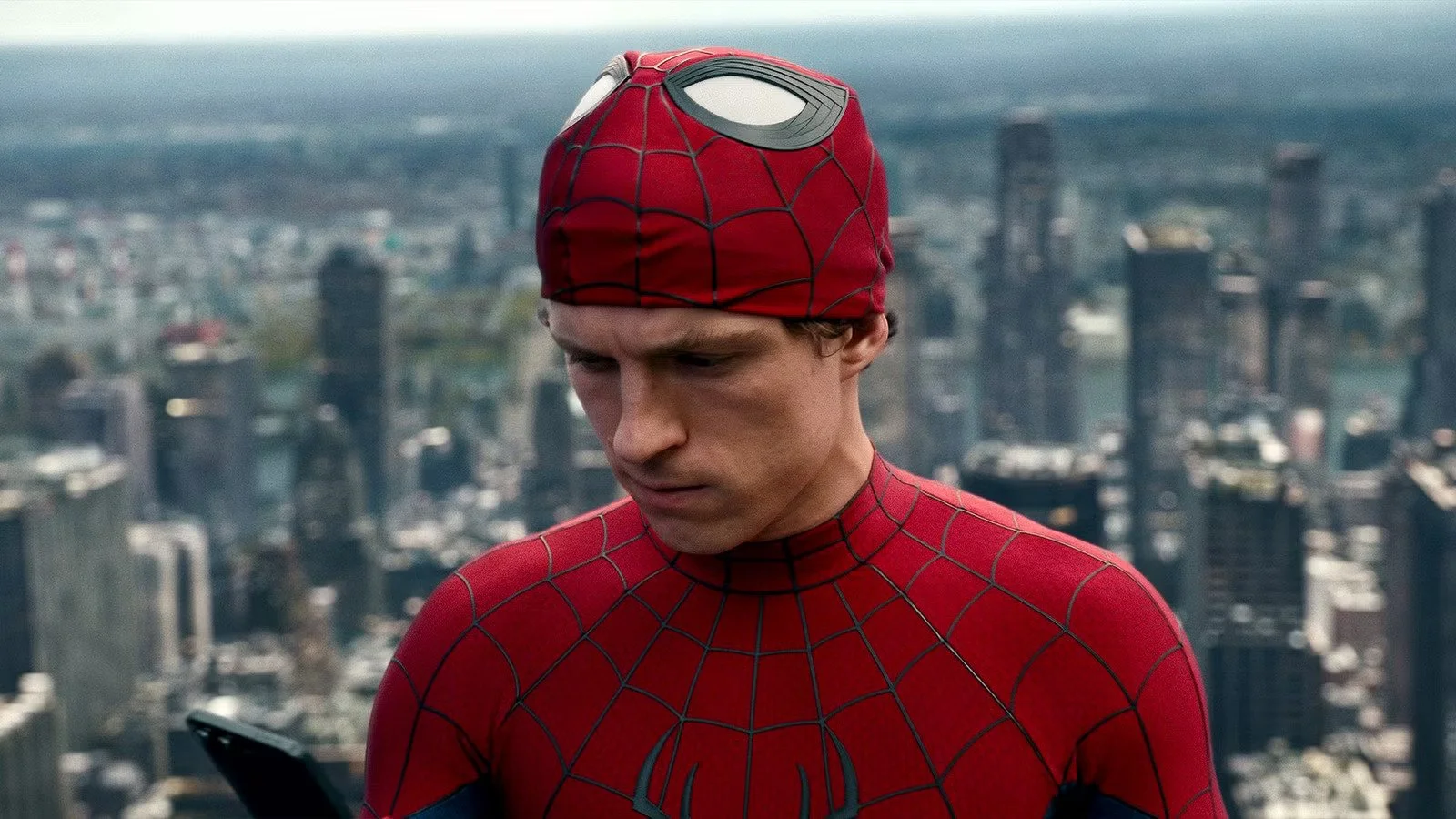

Why is Spider-Man: Brand New Day one of the most successful movies of all time? Certainly, it’s an effective bit of entertainment, the sort of big movie that draws both casual moviegoers and diehard fans who want to see what the world’s most popular superhero has been up to lately. While the Marvel Cinematic Universe has receded from its cultural dominance in recent years, Brand New Day is a reminder that there’s still a strong audience for MCU content so long as the story is not entirely beholden to the machinations of worldbuilding and franchise interlinking. Brand New Day is successfully its own movie, not just franchise extension, and is more interested in character than the typical MCU picture. But these facts only scratch the surface of why Brand New Day is eclipsing even the meteoric success of the past entry, No Way Home, which is the be-all and end-all of nostalgia bait at the cinema.
Brand New Day catches up four years after No Way Home, which ended with Peter Parker/Spider-Man (Tom Holland) using Doctor Strange’s spells to return the multiverse heroes and villains back to their original dimensions but erasing all memory of Peter Parker in his universe in the process. That means his girlfriend MJ (Zendaya) and best friend Ned (Jacob Batalon) have no memory of him, so when we meet Peter here, he’s wistfully watching their success at MIT from a distance via Instagram Stories and Live Reels. The Spider-Man of Brand New Day is devastatingly alone, and as we learn through the arc of the film, no person, even a legendary hero, can do it all on their own.
Spider-Man has spent his years of solitude cleaning up the city and catching all the various baddies roaming about, locking them up for the Department of Damage Control (DODC), which is responsible for keeping tabs on superpowered individuals following the attack on New York from the first Avengers movie. But when a new telepathic villain appears dead-set on entering the DODC and securing what they have locked in a vault there, Spider-Man is pulled into a larger conspiracy that threatens everyone in the city.
As Spider-Man: Brand New Day is a Marvel movie, it’s plot heavy, with a lot of elements continuing arcs of past movies or building off events from other movies and TV shows beyond the previous Spider-Man films. That said, it’s more contained than the typical MCU movie with a surprising focus on the inner life of Peter Parker. Peter here is a sadder and lonelier young man than we’ve seen before, more similar to the self-denying Peter Parker of Spider-Man 2 (2004) than the happy-go-lucky nerd of the first three MCU standalone films. When he’s not fighting crime, he is visiting his Aunt May’s grave or building new technology in his dingy attic apartment. He’s a loner, emotionally withholding, and feeling helplessly disconnected from those he cares about. Perhaps this emotional approach is the core reason the movie is registering so strongly with audiences, particularly Gen Z viewers. Audiences and critics have lauded how emotional the movie is, which is overstating things compared to a typical drama, but relatively true for a Marvel movie in that Brand New Day is interested in character more than action, emotional experiences more than kinetic ones.
Audiences have likely gravitated towards how Brand New Day explores Peter’s isolation and its emotional consequences. Most of his interactions are either virtual (via phone or internet) or anonymous (behind the mask). When he does talk to people he trusts, whether a friendly detective (Liza Colón-Zayas) or Frank Castle/The Punisher (Jon Bernthal), he withholds information about himself as he feels that it’s in everyone’s best interests to obliterate his own personality on the altar of his masked persona. To make matters even worse, his body seems to be developing advanced arrachnid abilities due to surging hormonal levels. He seems to be alienated from even his own body. Perhaps younger audience members sympathize with a Peter who feels consumed by his avatar, controlled by responsibilities, and weirdly out of touch with his own physical existence since it reflects so many of their own struggles—albeit heightened to comic book levels.
Tom Holland is the Gen Z Spider-Man who has typical Gen Z struggles with loneliness, anxiety, and purpose. Holland’s Peter Parker does not deal with his issues as the older Spider-Man characters did, nor how older characters do in the movie, such as the Gen X Frank Castle, a vigilante who is much happier killing bad guys than locking them up. Frank externalizes all his problems to avoid dealing with his internal problems, which are legion—when the villain gets a glimpse into his mind, they comment that he’s one messed up guy. Peter, rather, hides them or subsumes them to the character he plays, much like a Gen Z person presenting as one person on social media and another person entirely in real life.
Once MJ and Ned move back to New York and Peter is forced into their orbit against his will, he’s filled with yearning, both for the past he lost (there’s that nostalgia again) and for the normalcy that he’s been denied. Holland has always had the physicality and earnestness that fits the Peter role, but never the confidence to command a film. Perhaps that confidence has finally come with age as Holland has matured into a fine performer (as demonstrated by The Odyssey). As well, the filmmakers have made some smart script tweaks with Brand New Day to wisely avoid plots where older figures overshadow Peter, as Iron Man, Mysterio, or the Tobey Maguire and Andrew Garfield Spider-Men did in the previous films. Frank is the older figure here, but he does not dominate Spidey—and Bernthal does not dominate Holland—the way the previous older stars did. He’s not a mentor to Spidey, and although he gives a worthwhile alternate perspective to his situation, he’s not someone Spidey automatically cedes authority to like he does in previous films.
It also helps that Holland has unforced, completely natural chemistry with Zendaya (his real-life wife), who weirdly is more impressive as MJ the less we see of her. We don’t get a lot of her smart, serious MJ in Brand New Day, but what we do get registers as authentic, especially when she’s having hard conversations with a Peter she does not remember, but who desperately wants her to.
I’ve spent most of my time discussing the film’s character development and emotional exploration, which says a lot about how this MCU movie stands out from the typical fare. But what about the action? What about the cameos? What about the villains? To the first point, no MCU property will ever impress through its action the way the Zack Snyder DCEU movies do, but director Destin Daniel Cretton at least tries to put a bit more physicality and fluidity into the action here. He previously directed Shang-Chi and the Legend of the Ten Rings (2021), which had decent kung-fu action, and he again demonstrates a competent understanding of action choreography as Spidey fights ninjas and heroes controlled by the telepathic villain. The action still tends to have a weightlessness to it—no Spider-Man movie has ever managed to make the visual of a swinging Spider-Man feel like it’s affected by gravity—but it’s a step up from the sludge of recent Marvel films.
Regarding the cameos, Brand New Day is thankfully short on them. We get a few scenes with Bruce Banner/The Hulk (Mark Ruffalo) and Yelena Belova/Black Widow (Florence Pugh), but no winking nods to other Avengers and certainly not the constant parade of callbacks and references and cameos we get in the previous three films. But while Cretton and his screenwriters get the MCU cameos right, with the villain they aren’t as surefooted.
It’s no surprise to say every Spider-Man villain has something of good intentions but tragic faults, but Brand New Day takes this to ridiculous new extremes. I don’t want to reveal too much for the few people reading who might not have seen the film yet, but suffice to say, the reveal of the villain’s identity is not too surprising, nor is the resolution of the plot particularly satisfying from an entertainment standpoint. The dramatic resolution is more centred on personal emotions and sacrifice than you might expect, but not particularly elegant or original from a conception or execution level—and is a bit too reminiscent of Stranger Things, to be quite honest.
But again, the Stranger Things connection might help explain the movie’s overwhelming popularity. Brand New Day savvily plays to character and plot constructions that connect with younger audiences and read as authentic and complex in an age obsessed with performative empathy and authenticity.
At the end of the day, it never achieves the pathos of any number of scenes in Spider-Man 2, such as Peter sharing a slice of cake with the girl downstairs who has a crush on him; nor the triumph, such as Spider-Man stopping the train; nor the heroism, with the people moving his unconscious body down the line. But it’s striking a chord in a genuine way that isn’t all bluster or nostalgia or novelty. In 2026, when young viewers go to a Spider-Man movie, they see Peter Parker as a mirror image of themselves. Brand New Day smartly frames its narrative around this now inescapable fact.
Spider-Man: Brand New Day (2026, USA)
Directed by Destin Daniel Cretton; written by Chris McKenna and Erik Sommers, based on Spider-Man by Stan Lee and Steve Ditko; starring Tom Holland, Zendaya, Sadie Sink, Jacob Batalon, Jon Bernthal, Florence Pugh, Tramell Tillman, Michael Mando, Liza Colón-Zayas, Marisa Tomei, Mark Ruffalo.
Read More Reviews

Matt Bettinelli-Olpin and Tyler Gillett’s action horror sequel is a mere reheat.