Hot Docs 2026: The Seoul Guardians
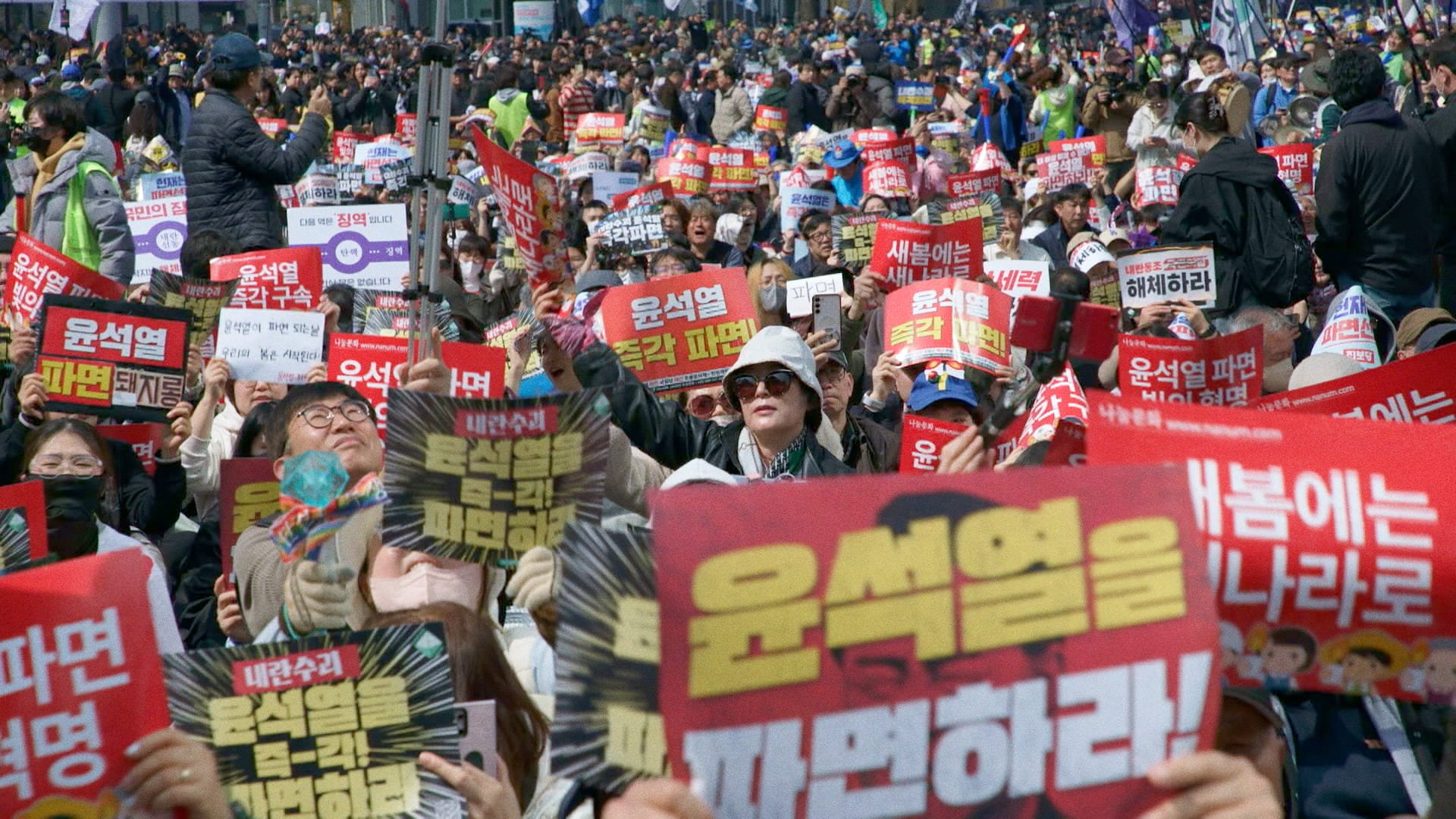
The Seoul Guardians is gripping, straightforward, unadorned documentary cinema. It charts the night of December 3, 2024 when then-president of South Korea Yoon Suk Yeol declared martial law and lawmakers rushed to the National Assembly to nullify his orders. Co-directors Cho Chul Young, Kim Shin Wan, and Kim Jong Woo document the night of chaos as the news hits the Korean capital and ordinary citizens rush to the National Assembly to defend lawmakers against the security forces ordered by Yoon to block the vote and arrest members of the assembly.
Most of the film is vérité style, shot on the ground by the directors and their fellow journalists who joined in the citizen movement to block Yoon’s security forces. The entire film only runs 71 minutes long, as Yoon’s attempted coup lasted only a few hours, but it was an intense period. The camera is on the front lines of the action at the National Assembly as citizens attempt to buy time for legislators and confront security forces acting under Yoon’s orders.
The film’s straightforward manner captures the shocking nature of Yoon’s declaration, the short struggle for power, and his quick downfall. It all escalates rapidly and, luckily, dissipates before any lasting damage is done to the citizens or the democracy. The film begins with footage of different groups of citizens protesting for and against President Yoon in the streets of Seoul during the day—showcasing the tension in the country, but hardly evidence of a declaration of martial law about to occur (the directors will loop back to these two sides of the political debate to cap off the film).
Soon enough, Yoon’s emergency broadcast punctures the relative stability of the city and everyone starts to panic. The reason is the Gwangju Uprising of 1980, a student protest movement against Chun Doo-whan’s coup d’etat of 1979, which was violently suppressed. This current moment, with its protestors in the streets, security forces descending on them, and a president orchestrating a coup, threatens to be a repeat of a dark past.
The directors intersperse clips of the Gwangju Uprising into the modern-day footage, cutting from soldiers then to soldiers now, the protest movements then to the protest movements now, troops surrounding the National Assembly then and surrounding it now. This editorial approach shows the parallels, which serve as a dire warning of how the night of December 3 could have proceeded. Thus, the citizens—the guardians of the title—act with an urgency that seeks to defuse the situation and allow the National Assembly members to vote down Yoon’s emergency powers and restore democratic rule.
We know after the fact that things stabilized, but the footage shows the chaos of the moment, as reporters and political aides set up makeshift barriers at doors to the National Assembly while citizens outside hold onto soldier’s machine guns and plead with them to ignore Yoon’s orders. It’s clear that their entreaties have an impact on the soldiers, who don’t want to be the ones to set off another massacre of citizens like during the Gwangju Uprising. It’s intense and inspiring to watch ordinary citizens put themselves on the line to defend their democracy.
The documentation of citizens descending on the legislative assembly to protect against a political insurrection creates subtle, perhaps even accidental, parallels to January 6, 2021. The MAGA protest is never mentioned in the film. It’s just that Jan 6 was the encapsulation of the bizarro world of political direct action—a riot at the Capitol from people who thought they were saving democracy but that was mostly just mobs of weirdos defecating on desks and trashing the halls of power. The Seoul Guardians shows what defending democracy looks like when you’re actually defending it. It’s a classic journalistic account of one night of chaos in a world capital and a gripping, if streamlined, demonstration of civic duty and democratic action.
7 out of 10
The Seoul Guardians (2026, South Korea)
Directed by Cho Chul Young, Kim Shin Wan, and Kim Jong Woo.
Read More Reviews

Matt Bettinelli-Olpin and Tyler Gillett’s action horror sequel is a mere reheat.