Review: Star Wars: The Mandalorian and Grogu (2026)
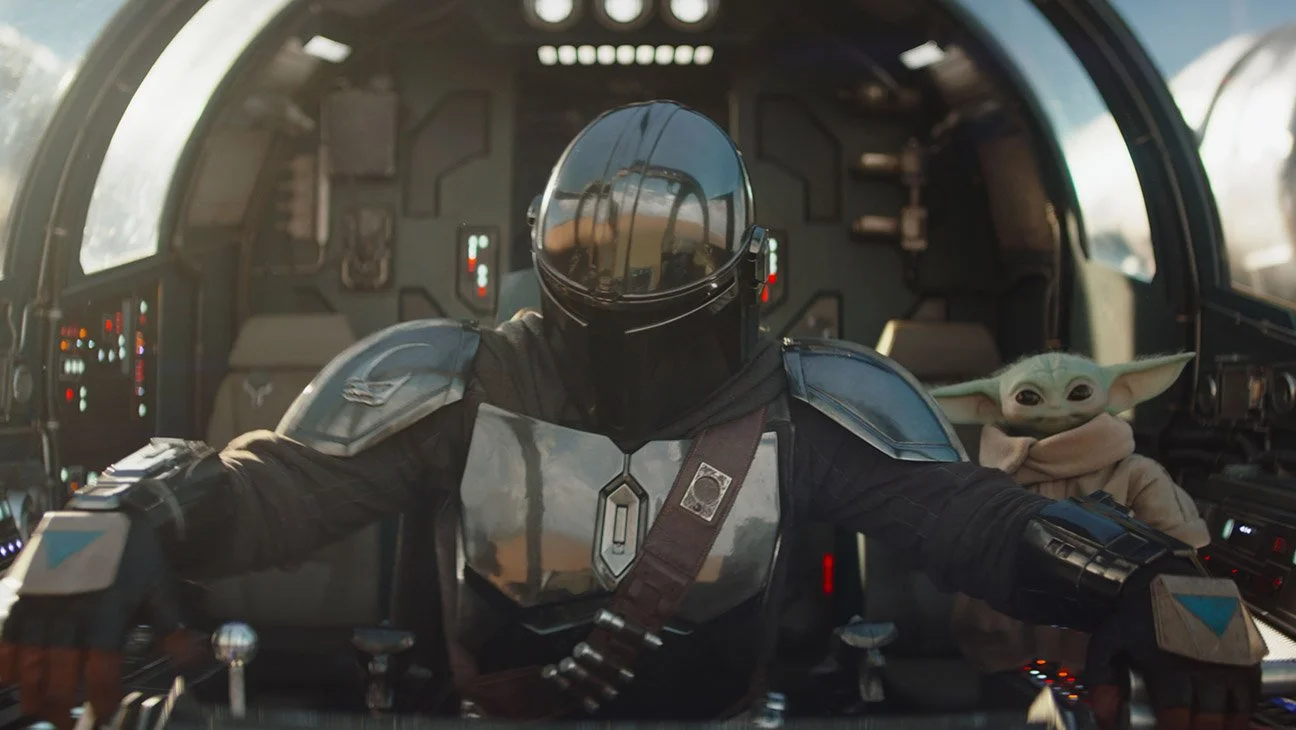

Star Wars: The Mandalorian and Grogu plays like the Jabba’s Palace portions from the first act of Return of the Jedi extended into a feature-length movie. How does that sound to you? For me, there was a time when the idea of a Star Wars movie focused on gangsters and bounty hunters would have sounded amazing. But times have changed.
In the long years between the close of the Original Trilogy in 1983 and the arrival of the first prequel in 1999, many fans such as myself couldn’t get enough of the galaxy’s scum and villainy. After all, the alien menagerie in the Mos Eisley Cantina in A New Hope, or the strange assortment of bounty hunters on the deck of Darth Vader’s Super Star Destroyer in The Empire Strikes Back, felt like only small glimpses of a much larger and more alien galaxy. Even the half-hour muppet extravaganza that is Jabba’s Palace wasn’t enough to redirect the trilogy’s focus away from the Rebel Alliance battling the evil Galactic Empire and Luke Skywalker’s journey to become a Jedi. Back then, fans only had Extended Universe comics books and novels to elaborate on those few glimpses.
In 2026, the Star Wars franchise and its place in the cultural landscape are very different, and The Mandalorian and Grogu seems more like a safe bet than a novel venture. At this point in the Disney Star Wars experiment, however, I’m all for a movie that sets a lower bar and actually attains it, which is what I think Jon Favreau’s The Mandalorian and Grogu does. I don’t need another ambitious, failed attempt at reshaping Star Wars.
I imagine playing things safe was part of the point. The Mandalorian and Grogu is Favreau’s cinematic follow-up to his cinematic-budgeted TV show, The Mandalorian, one of the original flagship series on Disney+. The show streamed three seasons between 2019 and 2023, with a spin-off show, The Book of Boba Fett, with large portions focusing on the Mandalorian and Grogu, tucked in between Seasons 2 and 3. The truth is, Star Wars movies have been hurting, even if they’ve still been profitable (apart from 2018’s Solo: A Star Wars Story). After the lackluster greeting of fans and critics for the big climax of Disney’s Sequel Trilogy, The Rise of Skywalker (2019), Disney seemingly retreated to the realm of streaming for Star Wars content, but even in television nothing has been a safe bet. Shows that should have been a sure thing have floundered (such as 2022’s Obi-Wan Kenobi, which I wrote about for the site), while less traditional takes on Star Wars have received both critical success (Andor) and outright hate (The Acolyte). It would appear that as the various backlashes to various choices in these shows have kept a negative momentum to the reception going, and with the impact of 2023’s Hollywood labour disputes, Disney decided to continue the story of Mando and Grogu as a movie and not a fourth season of the show. After six and a half years without Star Wars in movie theatres, did they also just want to return to the big screen with a guaranteed hit?
The good news is that Jon Favreau—whose success with Iron Man all the way back in 2008 helped make Marvel Studios into the blockbuster powerhouse it became—is a smart, capable, and shrewd blockbuster director. With The Mandalorian and Grogu, Favreau and his co-writers, Dave Filoni (the creator behind the animated Star Wars universe and current President and Chief Creative Officer of Lucasfilm) and Noah Kloor (who helped write The Book of Boba Fett and some episodes of The Mandalorian) avoid either making a new kind of Star Wars story or challenging existing themes and narratives. We also don’t get another legacy sequel Frankenstein, built of repeated forms and structures and some awkward new parts. Instead, Favreau and his team give us just another chapter of his established Star Wars story about a bounty hunter and his kid, with some nice elaborations for the dedicated Star Wars fan. With this film’s lack of other trademark Star Wars movie features, such as an opening title crawl or a John Williams score (or inspired score), and with a focus away from Skywalkers, Jedi, and the fate of the New Republic, the film is very clearly a cinematic extension of the show, for better and for worse.
Overall, the action is better. Favreau crafts a number of rousing set pieces, although none can top the opening gambit, which gives us the film’s sole engagement with Imperials (or “Imps”) on an icy mountain planet. Mando dispatches Imperial warlords, snowtroopers, and AT-ATs like some nemesis of myth—or like John Wick. In fact, the connections to the assassin action franchise run deeper. I noticed as The Mandalorian show went on that the action sequences started to deploy more and more gun-integrated martial arts, and the movie pushes things even further. Kick, punch, shoot one way, and a double tap shot the other. I’m not sure what some of the complaints online are about: the action in the movie is well-conceived, well-shot, and well-edited. It’s clear and fun and exploits the many devices our main character wears in his suit of armour. I would recommend the movie for the action sequences alone.
As with the series, especially Season 1, the film is happy to exist within the conventions of existing genres. Star Wars movies have already done this once with Rogue One, which is a team heist movie, with the common subplot of the main rogues trying to change their destiny (yes, it’s more like Ocean’s Eleven than you might realize). Season 1 of The Mandalorian was very much a Western and a samurai series (the two genres, of course, having a long history of intertwining), and individual episodes of later seasons had solidly genre-focused episodes, including prison heists and invasions of the villain’s lair. Favreau’s show is built on references to outside works, as Lucas’s Original Trilogy was, and not just on references to other Star Wars texts (although I suspect Filoni made sure there are enough connections to maintain continuity with the rest of the Star Wars universe).
At heart, The Mandalorian and Grogu is a gangster movie set in crimeland, one in which an exceptional hit man or operator is recruited to pull off what should be a routine recovery job that (unsuspectingly) involves layers of deception, and (of course) does not go according to plan. In the film, Din Djarin, the Mandalorian (Pedro Pascal), is working as a gun-for-hire exclusively for the New Republic’s X-wing marshals who patrol the Outer Rim. Mando is asked to bring back Rotta the Hutt (hilariously voiced by Jeremy Allen White of The Bear), the son of Jabba the Hutt, to the current Hutt mob bosses, the Twins. If Mando brings Rotta in, the Hutts will provide information on the whereabouts of a mysterious Imperial warlord who the Republic desperately seeks. The mission will lead Mando and his apprentice/son, Grogu, through the underworld moon of Shakari (which looks a lot like the smuggler moon of Nar Shaddaa from the Extended Universe, for those who know).
On Shakari, they discover that Rotta is a reformed soul (drawing on White’s angsty longing for a better life that he channels into The Bear as well) who is also a professional fighter owned by a local mob boss. Mando will have to decide whether to help Rotta or just bring him in. I think White delivers a strangely memorable (and buff!) Hutt who is not like any of the others we have seen before.
A little more than halfway through, though, the film seems to close, as many Westerns and crime movies do. But the idyll achieved will be fractured, and the reluctant decision to finally end things “once and for all” must be committed to—again echoing so many Western and crime genre movies. This will lead Mando and Grogu to the Hutt homeworld of Nal Hutta. Some viewers less familiar with Star Wars might be alienated by setting many of these conventional tropes on the strange jungle and bog world of Hutt space worms, but as a fan I found it nicely elaborating on existing characters and lore.
For me, what makes the movie more than just a decent space crime movie with solid action is the extended, quiet sequence in the second half, in which Grogu must grow up and stop being a baby. The film pauses and slows down to focus on the natural world and Grogu working to survive, and the little puppet (mostly physical but sometimes digital) holds the screen as the main character. This, and the almost Fraggle Rock-like sequences with the hilarious little mechanic guys, the Babu Frik (basically the only holdovers from The Rise of Skywalker), show a commendable confidence, as if Favreau was emboldened even more than in Season 1, when Werner Herzog famously chastised the crew, “You are cowards. Leave it,” meaning “shoot with the puppet.” The sequences focusing on Grogu and the other little puppet creatures worked for my boys and it worked for me, and I think it will work for anyone going into this movie with knowledge of who Baby Yoda actually is or having watched and liked a few episodes of the show.
At times, the movie does seem to suffer from feeling like a few episodes jammed together. The second half, going to Nal Hutta, picks up after a false ending, as alluded earlier, and we can almost see the episode break. Likewise, many might have wanted a more consequential movie—on a galactic, not personal, scale—featuring this amazing Mandalorian warrior and his Force-powered child fighting the Empire. Part of me thinks the movie’s story might have made a better Season 3, with that season’s Retaking of Mandalore saga, featuring Bo-Katan, making a more epic movie (imagine if the already large scale of the last episodes of Season 3 were in a movie!).
Alas, the state of Star Wars is so imperfect now, so evidently undirected by one creative mind, that such hopes are virtually useless. In a world without George Lucas controlling Star Wars (Eopie farts and all), I think a modest hit that delivers many pleasures and doesn't disfigure prior films (or alluded-to backstories) is a success in my books.
7 out of 10
Star Wars: The Mandalorian and Grogu (2026, USA)
Directed by Jon Favreau; written by Jon Favreau, Dave Filoni, and Noah Kloor; starring Pedro Pascal, Brendan Wayne, Lateef Crowder, Sigourney Weaver, Jeremy Allen White, Steve Blum, Jonny Coyne, and Martin Scorsese.
RELATED POSTS

Matt Bettinelli-Olpin and Tyler Gillett’s action horror sequel is a mere reheat.