Review: Michael (2026)
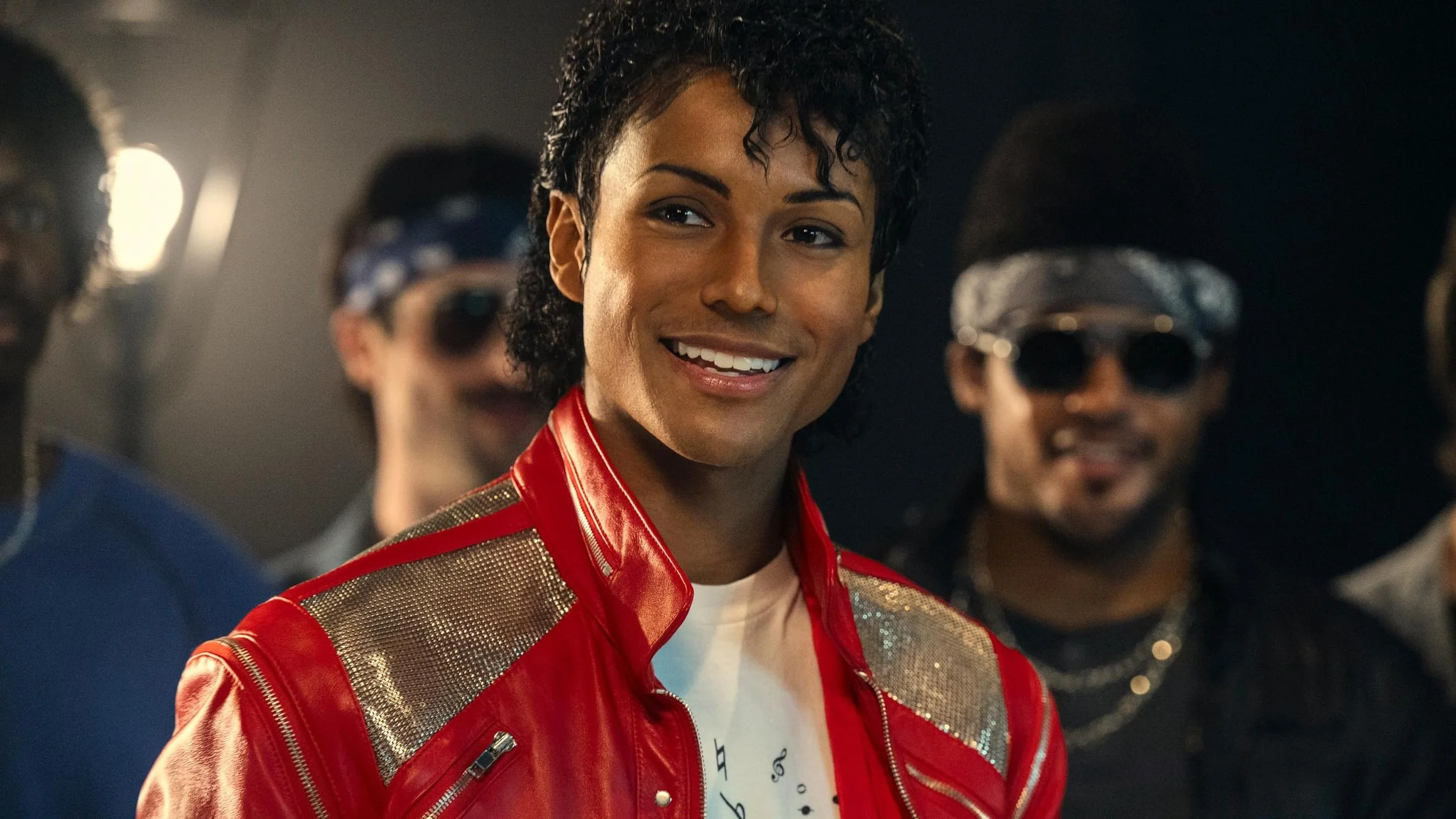

Michael, the new Michael Jackson biopic that was produced by the Jackson estate, written by John Logan (Skyfall), and directed by Antoine Fuqua (Training Day), is breezy popcorn entertainment. It gets the razzle dazzle of Michael Jackson as a performer and shapes a larger-than-life narrative about this young man with all the talent in the world struggling against his controlling father to write his own artistic legacy. If you like the music—and we all do—it’s hard not to have fun with the film. It’s also a complete fantasy.
I mean this descriptively, not pejoratively. Like most Hollywood musical biopics, Michael conjures a fantastical story of its protagonist that is sanitized, inspirational, and larger-than-life. As an origin story, the film treats Michael Jackson as a superhero like Spider-Man—someone with extraordinary talents who overcomes personal adversity to benefit the whole of mankind. If you find this distasteful in a film about someone like Michael Jackson, who was credibly accused of the sexual abuse of children, I don’t blame you. But you also shouldn’t be surprised by the film’s success—at the box office and with general audiences. Most people don’t seem to care about the details of the true story, even in a movie “based on a true story.” They care about the emotions they feel when they listen to Michael Jackson’s music. His music is inspirational, infectious, joyful—and so they want the movie about the man who made the music to inhibit this same joy.
To get around the time period of the allegations, and to present this fantastical look at the life of Michael Jackson, Michael covers a fixed timeline rather than the entirety of his career. It begins in 1966 in Gary, Indiana, where the domineering Joseph Jackson shapes his five sons into the Jackson 5. It ends in 1988 during Michael Jackson’s first solo tour for Bad. Thus, the arc is about personal agency—about him becoming Michael and not just another member of the Jacksons.
There’s much to consider about the film’s originally conceived narrative arc—which included the 1993 sexual abuse allegations and also a different framing device for the film—but we have to deal with the movie as presented. And Michael as presented is about a man using the rewards of his talents to create the perpetual childhood he was denied as a youth. In between the many musical sequences or dramatic confrontations with Joseph Jackson, played by Colman Domingo with his typical overcalculated bluster, Michael Jackson, played by Michael’s nephew Jafaar Jackson, is a perpetual innocent here.
In the early scenes, we witness Joseph beating Michael into becoming a star performer—literally. Whenever Michael fails to hold eye contact during a rehearsal in the Jackson living room or pushes back against his father’s domineering control of the family, he’s punished with the belt. Fuqua doesn’t delight in showing the abuse on screen, but he does emphasize the repetitive nature of Joseph’s abuse. It’s persistent and becomes a rather ordinary fact of life for the family—that no one ever comes to Michael’s defense hangs over the entire situation.
It doesn’t help that Joseph’s demanding approach for his children does contribute to their stardom. When they take the stage with Gladys Knight at a Motown event, they’re polished and able to attract the talent assistant who eventually brings them onto the label. Joseph is presented as a bully in Michael but the film also subtly walks the line of showing that even a bully can have an eye for shaping talent. The movie never categorically rebukes his influence on Michael’s stardom, even if it shows the necessity for Michael to get out from under his shadow—even if that happens later than Michael had hoped.
Once the Jackson 5 are on the charts, it’s a meteoric rise for Michael, leading to his decision to go solo with Off the Wall in 1979. From the moment we get the montage of the Jackson 5 on television, Michael becomes mostly one painstaking recreation after another of iconic musical moments from Michael’s early career. We get the creation of the Thriller music video—or short film, as Michael demanded they be called. We get the behind-the-scenes of the “Beat It” video where Michael decided to include Bloods and Crips while filming in Skid Row, Los Angeles. We get the debut of the moonwalk on Motown 25: Yesterday, Today, Forever on NBC in 1983. Fuqua, in contrast to the dreadful but equally popular Bohemian Rhapsody from 2018, actually does a good job with the recreations in Michael. He’s surefooted with the camera, slants the editing towards the dance moves (which Jaafar Jackson aces in his performance), and generally doesn’t overcut—which is important in comparison to the seemingly random editing of Bohemian Rhapsody. He also knows how to frame a scene, not over expose the lighting, and defer to good performers on screen.
But Michael does share the propensity to become a filmed concert, much like Bohemian Rhapsody. The end of the film moves from an extended sequence at the Victory tour with the Jacksons at Dodger Stadium to Michael’s first solo performance with “Bad.” Like the Live Aid concert at the end of Bohemian Rhapsody, Michael is content to play to the cheap seats and give audiences a greatest hits compilation of wonderful musical performances. Although I still find Bohemian Rhapsody terrible, I’m less critical now of this general approach in movies. It’s simple fan service, no more egregious than having Tobey Maguire show up in Spider-Man: No Way Home (2021)—and no less effective for the target audience. People go to these movies because they want to luxuriate in the music, be transported back in time, and, for a brief moment, feel like they’ve become their younger selves. It’s nostalgia, pure and simple—even for the younger audiences who were never alive (or aware) during Michael Jackson’s career, but yearn to experience the magic of being a fan during his heyday.
Furthermore, Michael has something Bohemian Rhapsody doesn’t: a genuinely fascinating lead performance. Perhaps it’s that Jaafar Jackson has no baggage whatsoever as a performer, or simply that he’s an uncanny mimic, but he truly disappears into the role. He isn’t a dead ringer for his uncle, but he makes you forget about the real man, such that you don’t mind that it’s Jaafar doing the dance moves or on the billboards in the film in place of the real person. So often a musical biopic cannot match the mystique of the real performer. For better and for worse, Michael avoids this pitfall as it presents the myth and the man as one and the same, which helps you get swept up in the storybook arc of a poor boy in Gary, Indiana growing into the world’s greatest musical performer.
Jaafar also brings a disarming gentleness to the role. Michael bends over backwards to portray Michael Jackson as a gentle, child-like savant—someone who is constantly giving gifts to sick children, donating money to hospitals, and engaging with his fans in a selfless manner. So it makes sense that Jaafar plays up the meekness of his version of Michael Jackson. But that doesn’t mean it isn’t effective. Even though the movie entirely ignores the abuse allegations surrounding Michael Jackson, it leans into his overall weirdness as a person. It pays lots of attention to what a strange personality he had, showing, among other things, how he would dote upon a storybook of Peter Pan, how he bought a pet chimp named Bubbles, and how he was enamoured of toys even as he became one of the most successful performers in the world.
There’s a simple throwaway scene in Michael that captures the quietly affecting way that Jaafar presents this side of his uncle. After going on a spending spree at the toy store and delighting all the other customers with autographs and friendly chatter, Michael returns home to the Jackson compound in Encino, California—oh yeah, if you didn’t know from real life, all the Jacksons lived together in one mansion, even half a decade into Michael’s superstardom. As Michael exits the car with a haul of toys, including Twister, he asks his brothers if they want to play some games. They’re shooting hoops and laugh off Michael’s suggestion, saying they’re heading out and have hot dates later—the assumption that Michael should grow up and realize there are better things to do with his time than play with childhood toys. Michael forces a smile, gives a wounded laugh, and says that they’re no fun anymore, but there’s genuine pain beneath the smile. In this moment and many others, Jaafar manages a pathos for a man that seems almost alien—a superhero to his fans, a cartoonish monster to his critics. Michael ends up capturing the isolation and loneliness of this truly strange, talented man.
Not that the film is some profound drama about genius. It follows up this brief moment of tenderness with a corny scene where Michael plays Twister with Bubbles the chimpanzee. For every moment of genuine connection that Jafaar manages, or Fuqua lets unfold, the film also has those surface-level journeys through history moments that pepper most biopics, as well as many corny moments revelling in Michael’s musical glory. Similarly, the musical sequences are entertaining, but they rely almost entirely on the power of the music and the brilliance of Michael Jackson’s real life performances. But what music, what performances.
All told, Michael is a shallow film about a profoundly complicated person. It benefits from its strong lead performance and the quality of its musical material such as to compensate for all the clichés that populate this genre. It might not be a great musical biopic, but it’s genuine entertainment, which counts for something.
6 out of 10
Michael (2026, USA)
Directed by Antoine Fuqua; written by John Logan; starring Jaafar Jackson, Nia Long, Juliano Valdi, KeiLyn Durrel Jones, Laura Harrier, Jessica Sula, Mike Myers, Miles Teller, Colman Domingo.
Read More Reviews

Matt Bettinelli-Olpin and Tyler Gillett’s action horror sequel is a mere reheat.