Review: Nouvelle Vague (2025)
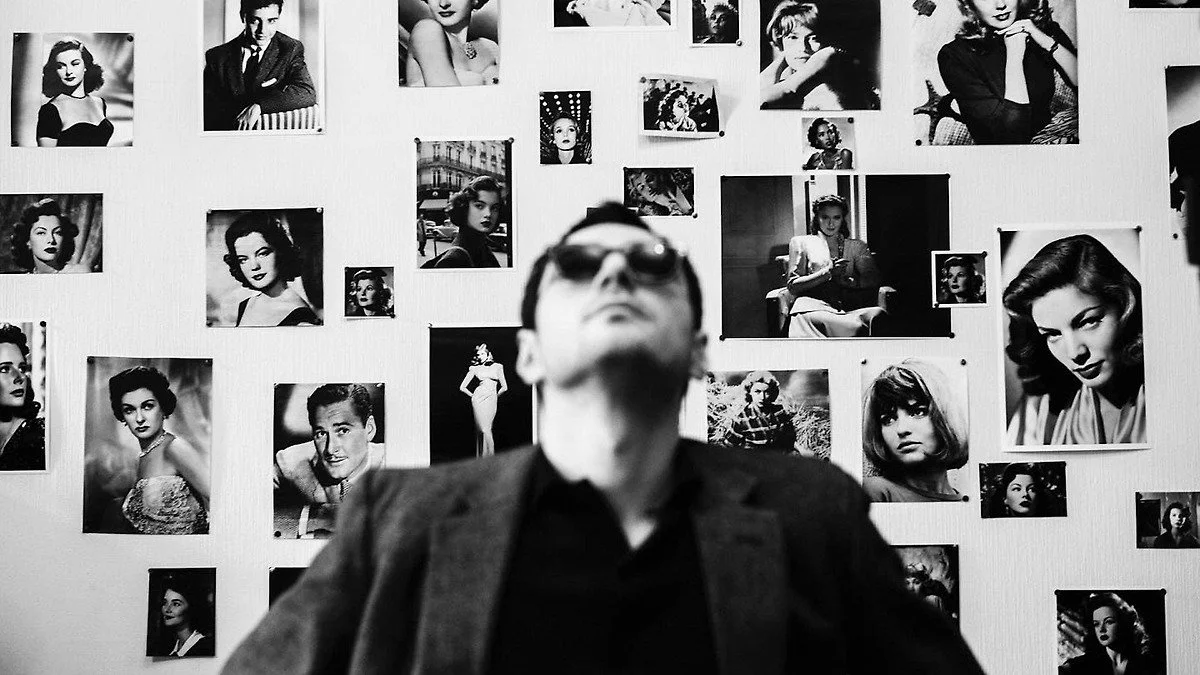

If Jean-Luc Godard had lived long enough to see Richard Linklater’s Nouvelle Vague, I doubt he would’ve liked it. But that’s a small matter for a film that uses the origin story of an iconoclastic artist to craft an enjoyable, even cosy, period piece about how much fun it is to make movies.
Linklater, ever the master of the hangout picture, crafts a hangout film where all the dudes happen to be some of the most influential filmmakers of all time. Nouvelle Vague inserts us into Paris, 1959 when the various critics of the Cahiers du Cinéma have all started transitioning to directing—except, of course, Godard. After François Truffaut premieres The 400 Blows to rapturous acclaim at the Cannes Film Festival, Godard realizes it’s time to make his own picture, permission be damned. So he calls in some favours and gets a scant budget to make Breathless, a romantic crime picture about a small-time crook and the American girl he loves.
From there, we follow Godard throughout the production, each day getting a title on screen to let us know how far we are into the 23-day shoot. Of course, the production is anything but conventional. Godard is such an egotist that he cannot even abide by the basic rules of shooting days. He films on the cheap without sync sound, permits, or shooting schedules. He doesn’t even have a script. Rather, he works off intuition and passion. If he runs out of ideas, he calls it a day and storms off in a sour mood. Godard operates on pure artistic inspiration, nothing more, and it only works for him since he’s something of a genius.
Godard’s artistic temperament drives his lead actress, Jean Seberg (Zoey Deutch), insane. The American starlet agrees to act in the film since she thinks it’ll help her career and give her some freedom after the strictures of working with Otto Preminger. But it turns out that the opposite of strict is still limiting for her, as she’s still in the thrall of an egomaniacal director who is overly demanding, even if he doesn’t care about having makeup or lighting or editing continuity.
As Jean Seberg, American star Zoey Deutch feels somewhat out of place, but that might be intentional, as she’s the sole American star and English speaker in the film. Linklater’s script positions Seberg as the one who doesn’t fit in—in contrast to the amiable Jean-Paul Belmondo (Aubry Dullin), who is just happy to be in the picture and have Godard follow through on his word to make a feature film with him. The others in the crew seem as amused with Godard as they are frustrated; they know he’s insufferable, but they also appreciate his artistic verve.
As Godard, Guillaume Marbeck does a nifty job of being Godard without playing into any biopic performance tropes. He looks enough like Godard and captures his cocksure obsessiveness, but doesn’t fuss much with his performance beyond that. Perhaps such a hands-off approach is best as it mirrors Godard’s own approach to filmmaking: work fast, don’t overthink it, and operate on instinct. If you follow your director’s cues, it should all turn out.
While stylistically different from Godard as a director, Linklater is also an instinctual director, giving his actors space to define the story and operating with a clear, consistent vision for his work. Filmed with a patient, unobtrusive camera, Nouvelle Vague is pleasantly stylized without being as radical as anything in the French New Wave. You have to wonder sometimes whether there were opportunities to take a few more stylistic cues from Godard, but at this point Linklater is so clearly his own director with his own laidback style that suits his affection for his characters and his amiable tone.
Furthermore, Linklater does little to show off here. His dedication to straightforward scene construction and reliance on the period hallmarks—French language, black-and-white Academy ratio, starring mostly unknown French actors who look a lot like the historical characters they’re playing—ultimately wins through and creates the credible atmosphere for the entire work. The funny thing is that the focus on filmmaking actually has more in common with the work of Truffaut, particularly Day for Night (1973), than Godard, who was more prone to play fast and loose with logic and character and on-screen credibility, especially once he got into his more radical work in the late 1960s.
Nouvelle Vague may be about the making of Godard’s Breathless, but it’s more about the movement as a whole than Godard as the individual figure. Hence, the title is apt: it’s an encapsulation of the beginning of this new wave that changed cinema, rather than an investigation of the mad genius at its centre. It’s amiable, fun, but not Godard, for good and ill.
7 out of 10
Nouvelle Vague (2025, France/USA)
Directed by Richard Linklater; written by Holly Gent and Vincent Palmo, adaptation and dialogue by Michèle Halberstadt and Laetitia Masson; starring Guillame Marbeck, Zoey Deutch, Aubry Dullin.
Read More REviews

Matt Bettinelli-Olpin and Tyler Gillett’s action horror sequel is a mere reheat.