Review: Chime (2024)
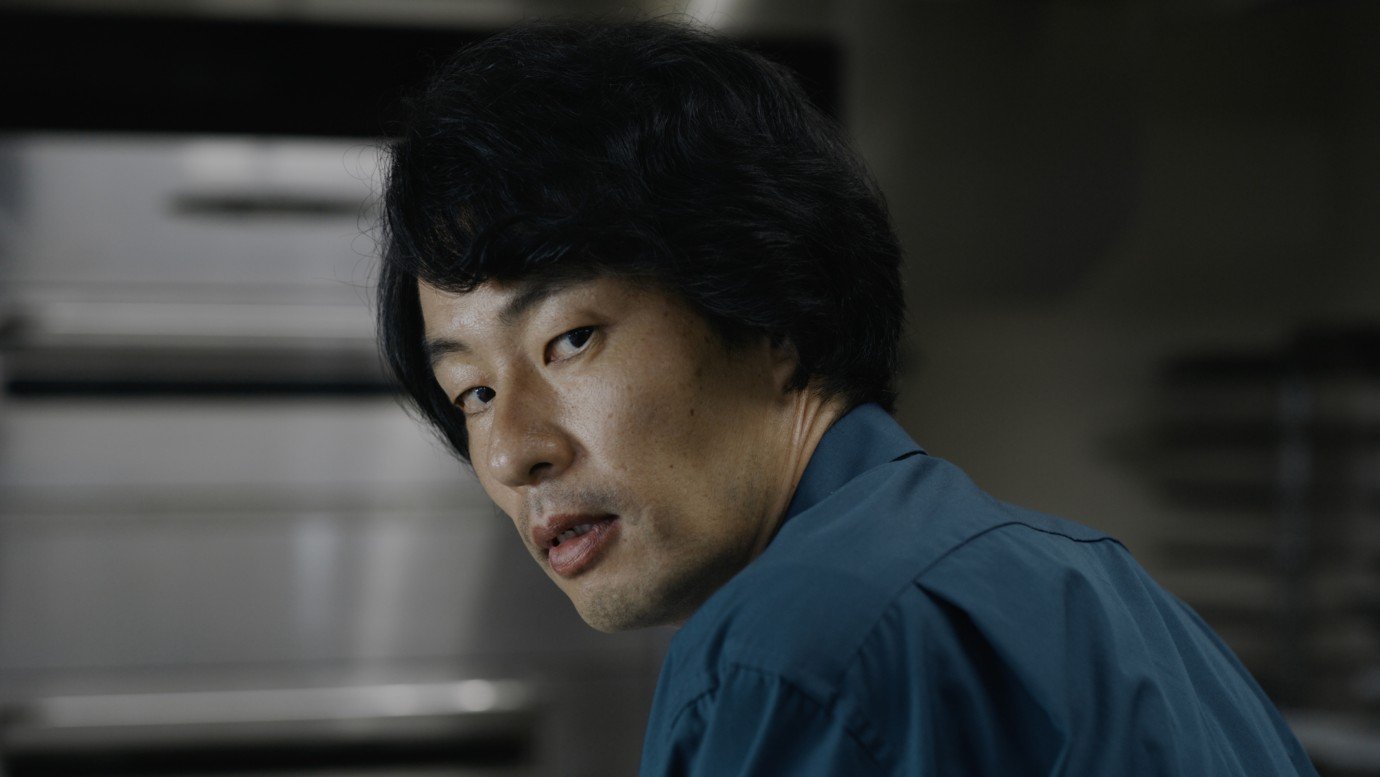
We’re all capable of evil. Some people might not believe this, but Kiyoshi Kurosawa certainly does. There are no monsters among us. Rather, those that commit evil are typically normal people drawn to the darkest corners of their minds, often for inexplicable reasons. Cure (1997) is Kurosawa’s most chilling envisioning of this belief, but Chime presents this philosophy in its most distilled cinematic form.
Running only 45 minutes and initially released as a NFT, Chime is about how a person can be driven to commit evil acts for no rational reason at all, activated as if cued by nothing more than the sound of a chime. Kurosawa explores this literally in Chime, with the chime of the film’s title acting as a trigger that awakens the evil within a human being.
The film follows the chef-turned-culinary teacher, Takuji (Mutsuo Yoshioka), who lives a quiet, repetitive, normal life, albeit one with some modest self-doubt and frustrations about meaning and human connection (all Kurosawa trademarks). Takuji is a talented instructor, but he has one odd student in class, who doesn’t take to new skills and doesn’t listen to instructions. Takuji initially dismisses the student’s comments about hearing a strange new noise that has transformed his brain, thinking it mere eccentricity. But when the student tells Takuji he’ll show him his transformed brain and sticks a knife into his own head in class, killing himself in the process, Takuji freaks out. Eventually, Takuji hears the chime for himself, leading him to the darkest avenues of human existence.
Chime is efficiently minimalist, chillingly precise, and has a fatalistic vision of humanity that terrifies more than most horror films, even if the film completely lacks jumpscares, moody music, and other hallmarks of the horror picture. Rather, Kurosawa weaponizes the barren spaces of Tokyo, from the culinary classroom where Takuji teaches to his meticulously-kept home where he lives, seemingly without any authentic connection with his wife and teenage son.
Kurosawa is showing us all the elements of a supposedly-meaningful life: a good job, a beautiful home, a supportive family. But the camera also draws attention to the emptiness of these elements, holding on Takuji in these spaces in patient wide shots so we can comprehend the disconnection between intention and reality. Would we be happy in his life? Would we fare better than Takuji if we heard the mysterious chime and witnessed these horrific events? Chime is not confident in a happy answer.
Yoshioka is fascinatingly enigmatic as Takuji, his stoic face suggesting but never telling—which is the point. We try to understand what drives Takuji in the aftermath of this violent scenario and no answer seems truly satisfying. He seems dissatisfied with his circumstances, but he’s so quiet that he never shares what’s driving him. Kurosawa never lets us inside his head. There’s no attempt to justify his actions or really comprehend what drives him beyond gestures at understanding; Kurosawa helps us to see that evil can be inexplicable, shocking, without true motivation. I’ve avoided spoiling the events of the film beyond the inciting incident because the shock of the narrative is core to the film’s appeal.
You don’t have to wait long to get to the shocks, either. Chime is only 45 minutes, but its haunting impact on the viewer lasts well beyond its runtime. It’s a vision of evil that you cannot escape after you watch the movie; plug your ears all you might, but the bell chimes for thee.
9 out of 10
Chime (2024, Japan)
Written and directed by Kiyoshi Kurosawa; starring Mutsuo Yoshioka.
Related Posts

Matt Bettinelli-Olpin and Tyler Gillett’s action horror sequel is a mere reheat.