Review: Secret Mall Apartment (2024)
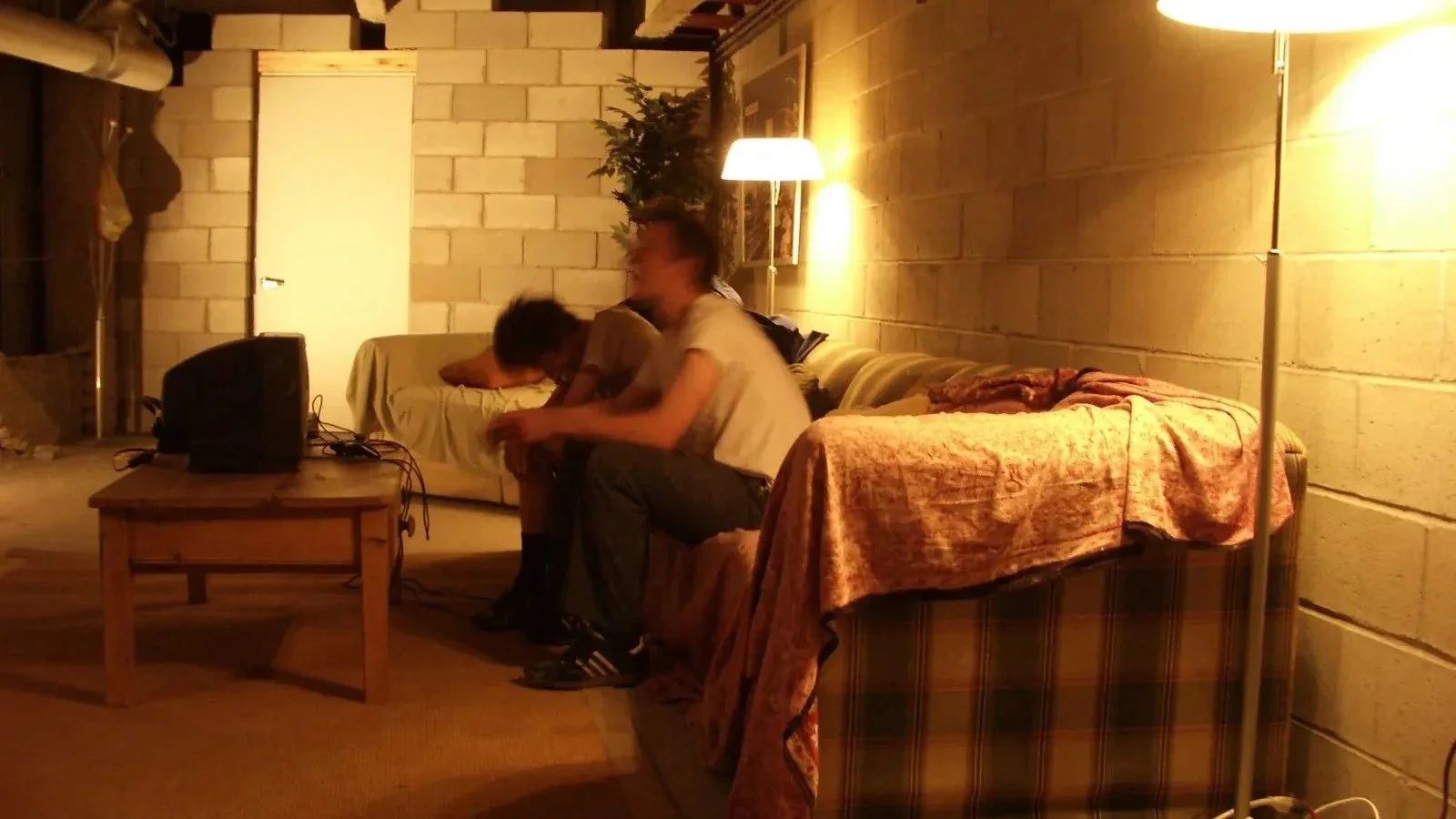
Secret Mall Apartment seems like a mere trifle on first watch, the sort of film that plays well at film festivals, but is quickly forgotten. It has a novel subject in a group of artists, led by Michael Townsend, who secretly create an apartment in the bowels of the Providence Place mall in 2003. The novel and amiable subjects and light tone lead you through this entertaining vision of the past, with some detours into discussions about gentrification adding a bit of social weight to the proceedings. But like the hidden space of the apartment itself, Secret Mall Apartment has surprising depth, gradually revealing itself to be an insightful examination of the purpose of art and the value of community. It ends up being one of the more remarkable movies about the power of art I’ve seen in recent years.
Similar to past documentary festival favourites such as Three Identical Strangers (2018), Secret Mall Apartment is a bit of a bait and switch, pulling people in with the intriguing hook and then surprising them with thematic depth. It also hits the ground running, wasting no time getting to its core story. Working with an abundance of archival footage supplied by Townsend himself, director Jeremy Workman quickly introduces us to Townsend and his fellow artists living and creating in the rundown urban spaces of Providence, Rhode Island. When a new mall, Providence Place, is constructed in an area marked for urban renewal, Townsend and his collective challenge themselves to live in the mall secretly for an entire week. During this challenge, they discover a strange gap area in the building, away from security thoroughfares and camera surveillance. They muse that it could be a cool space to hang out in so they do so. And then they start to make it more comfortable, transforming it into the apartment of the title.
They bring in furniture. They add another wall and a door with a lock, supplying cinder blocks that match the actual walls of the mall. They run cables for electricity and were even planning to add a bathroom and kitchenette piecemeal over time. It’s remarkable watching this process of audacious, playful creation. They build the apartment because they can. When they realize they can get away with it, they start to expand the project, the space becoming an ever-more-audacious expression of play and DIY creativity. It’s a hoot watching the archival footage of the group building the apartment, sneaking in cinder blocks, and somehow talking down security guards in the few moments they’re caught. It’s also fun watching these artists fondly reminisce about what they got away with and the whole process of creating the apartment.
But however much the early footage may have you think that this apartment was the core focus of Townsend and this collective’s artistic lives, it wasn’t. The apartment was something of a lark and it became a useful space and inspiration where the artists could plan and collaborate on their more important projects. As we see in the early scenes exploring Townsend’s previous public, illegal art installations, including a stunning piece known as “The Tunnel,” Townsend transformed urban decay and hidden spaces into complex artworks. Later, we learn that he devotes himself utterly to art projects that bring him no income, no fame, but cause immeasurable impact on others.
First is his volunteering at children’s hospitals to make tape art with sick children. This is not a one-off, but a consistent project where Townsend will visit the Providence children’s hospital to create tape artworks on the walls of their rooms and throughout the hallways and operating areas. His elaborate work makes it seem like a child is surrounded in their bed by animals or floating away from the operating table on a hot air balloon. He then teaches the children to do it themselves, transforming these dour, sanitized spaces into expressions of their imagination. And because the tape is temporary, it can simply be removed at day’s end or when the spaces need to be transformed or cleaned; the impermanence is the point, as it becomes a way of engaging the child in the moment, helping them live outside their condition and transform their environment in the process.
Townsend’s other project was a gargantuan one, where he would visit New York every September 11 to create tape artworks of firefighters, police officers, and other first responders throughout the city. He would create a tape mural for every single first responder who died on 9/11 as a tribute to their sacrifice. He has no permission to do this, but because it’s tape, again, there’s no lasting environmental impact of the art, so no credible accusation of graffiti can be levied at him. It can simply be removed. But he would photograph it, document it online, and connect it with the profile of a person who died trying to help others that day.
Through both the archival footage and present-day interviews with Townsend, we come to understand his unique approach to art, which is therapeutic and creative, but also communal. He expresses himself in his work, but also incorporates others and the environment, transforming things that are often unpleasant into creative expressions of emotions and healing. Thus, the secret mall apartment is another extension of his artistic thesis, but also a staging ground. Townsend would never consider it his greatest accomplishment, even if it’s what he’s now most famous for.
The apartment, like his other projects, is not about making money, increasing his artistic profile, or establishing a timeless legacy. It’s not about networking or commercial potential. It’s art for art’s sake, expression without expectation. As I’m increasingly forced to recalibrate my relationship to art in my own personal life, Secret Mall Apartment has helped me imagine a way forward, one that is creative and expressive, but less hemmed in by commercial implications. Sometimes, the freedom to create is all that you need to express yourself. Secret Mall Apartment teaches this lesson in unexpectedly poignant ways.
8 out of 10
Secret Mall Apartment (2024, USA)
Directed by Jeremy Workman.
Read More Reviews
Alexander Ullom’s high-concept debut feature conjures an existential nightmare.