Remembering Catherine O'Hara (1954–2026)
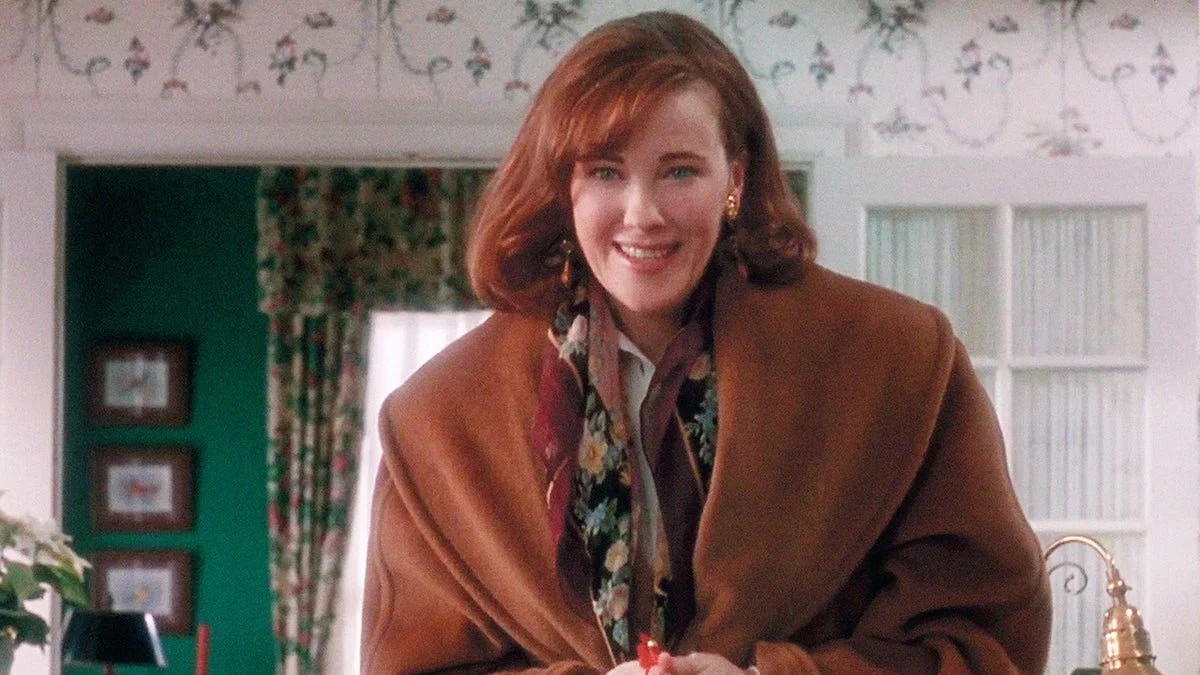
Anton: Catherine O’Hara was a selfless actress and comedian. This might sound strange, given that she often played terribly conceited characters (Kate McCallister, Kevin’s mom in the Home Alone movies, being the most prominent exception). But as I was thinking about something to say about one of Canada’s great comedic actresses, I was struck by how selfless O’Hara’s performances often are.
Now, brothers, before I turn over the reins to you and get your reaction, I just want to quickly flesh out what I mean by this.
First, I’m struck by how many of O’Hara’s signature roles are part of a duo—with Eugene Levy frequently being her counterpart—or as part of an ensemble cast. After news of her death, I rewatched Best in Show (2000), Christopher Guest’s mockumentary following entrants in a prestigious dog show, including Cookie and Gerry Fleck and their Norwich terrier from small-town Florida. O’Hara plays Cookie and Levy plays Gerry. Cookie was the popular, promiscuous girl in high school, but she married the dork. Her performance as Cookie is all about the dynamic between the two.
O’Hara never made her characters singular figures. She never tried to draw all the attention to her performances, even when her characters craved attention. There was nothing selfish about her engagement with her peers onscreen. Perhaps it stems from her background in improv, where you learn to rely on those you perform with.
Second, O’Hara seemed comfortable with playing her character—who was often the object of satirical ridicule in the film—to the point where we might dislike the character. Her characters could be insufferable. Yet, strangely, there was this generosity to how she would give herself to such an insufferable character. She didn’t care about making the audience like her—again, even if her character craved the attention of others. But when she wanted us to like her character—as with Kate McCallister, a great maternal figure—it didn't seem forced.
Take Schitt’s Creek, in which she played Moira Rose, which was the role that really made her big again over the last decade. She was fine with Moira being totally ridiculous. One of my criticisms of that show was that, as it went on, Daniel Levy seemed to have this desire to make the audience really like David Rose. His character had to develop and grow, and not just be terrible and obnoxious, and so we got later seasons largely about his romance and eventual marriage to a local boy. In contrast, I always appreciate when a satirical performance is willing to just go the distance and be the object of ridicule. There’s something selfless about surrendering to the performance and its purpose in my view.
Am I off with my praise here, brothers?
Aren: I’d perhaps say she was guileless as an actor, or egoless, but I know what you mean here.
Anton: I like “egoless.” That’s a good descriptor.
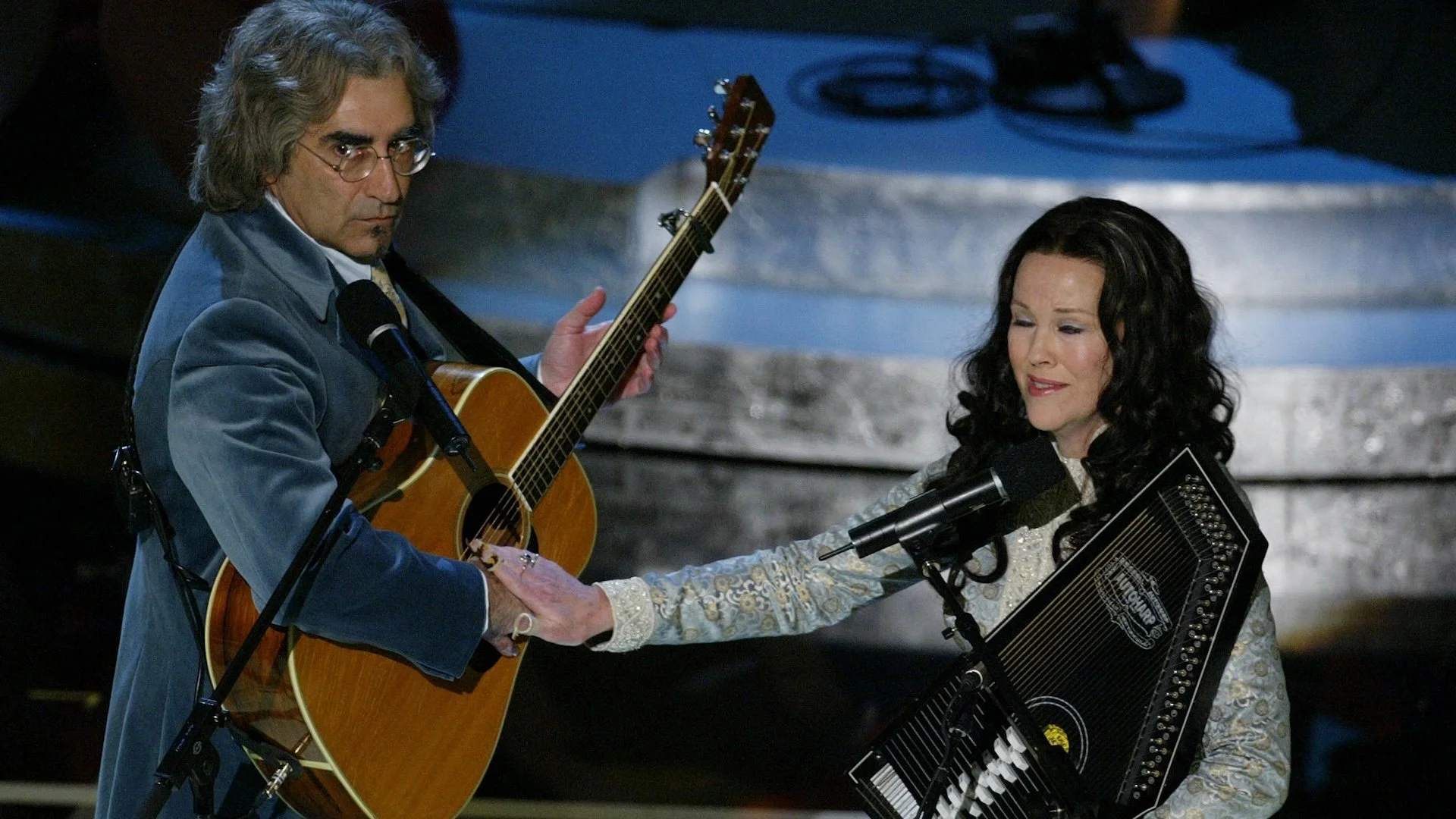
her roles in Christopher Guest’s Mockumentaries
Aren: O’Hara being egoless is evident in all her work in Christopher Guest’s films: Waiting for Guffman (1996), Best in Show, A Mighty Wind (2003). In Waiting for Guffman, she’s paired with Fred Willard’s Ron Albertson as Sheila Robertson, a small town travel agent who fancies herself one of the pros of the local theatre scene, even if that simply means she has acted a few times before. Sheila is outlandish, especially when they go out for dinner with Eugene Levy’s Dr. Allan Pearl and his wife (Linda Kash), and Sheila gets really drunk and impromptu asks Mrs. Pearl what it’s like to have sex with a circumcised man. Of course, this is spinning off an ongoing joke about Willard’s Ron having penis reduction surgery, so the entire concept is ridiculous, but she plays it so straight without a wink at the audience. Furthermore, she doesn’t do anything to make herself the focus of attention in the scene, content to let Levy and Willard have the fun with their bewildered reactions to her drunkenness. She was a true pro in that she was able to disappear into the character and let her co-stars shine, even when she was playing over the top.
Anders: I think you’ve identified something really great about her as an actress, Anton. And I think that you’re right to suggest that it might have something to do with her early work doing improv and with the Toronto Second City troupe and later SCTV. It’s quite the group of peers she had in that enterprise: not only her frequent acting partner, Eugene Levy, but also John Candy, Andrea Martin, Harold Ramis, Martin Short, Rick Moranis, and Dave Thomas.
Anton: That is a stellar lineup.
Anders: All of those actors have had their moments of prominence in comedic film and television, and you might have said that O’Hara’s were in the late 1980s and early 90s. In that view, her work with SCTV, and then Burton, culminates in her role as Kate McCallister in the Home Alone films. If she had been remembered mostly for those roles, in which she was good but had a smaller part, it would be a respectable film career. But I also think that it’s notable, and one of the reasons O’Hara’s death came as such a shock to so many people, that she had experienced something of a renaissance in her later years with Schitt’s Creek, as well as her most recent role on Seth Rogan’s The Studio as Patty Leigh, a studio executive and mentor to Rogan’s Matt Remick. She was consistently a memorable and funny actor, and as you said, not afraid to be the object of ridicule.
She had a pretty solid film career too. Like you, I always enjoyed her characters in those films from my childhood and youth, such as Home Alone and Beetlejuice, and the Christopher Guest films that she participated in were very enjoyable too. Best in Show is great, but my favourite of her roles in Guest’s films is as Mickey Crabbe, one half of a folk duo in the musical mockumentary, A Mighty Wind. There’s something touching about the role and the character, beyond pure ridicule and satire.
Aren: She’s excellent in A Mighty Wind. Contrasting her with Levy in that film really shows how O’Hara had an underrated subtly as a performer. My greatest criticism of that film is that Levy overplays the eccentricities of Mitch, the reclusive former folk star who loved Mickey in the past. He affects a stilted way of talking with these agonized, awkward lurches between words, all punctuated by his wide-eyed, frazzled stare. A Mighty Wind has a lot of lovely touches and character moments—basically anything with Christopher Guest, Michael McKean, and Harry Shearer as the Folksmen is great—but Levy’s performance is not one of them. It’s too affected and self-engaged.
On the flipside, O’Hara is marvellously invisible in the role. She affects a Midwestern accent, almost Minnesota nice, and is a bit spacy, but she doesn’t overdo these little characteristics. Furthermore, she is able to weave in some insightful moments in the midst of the more absurd ones. Perhaps the best example of this is late in the film after the big climactic performance. She’s rediscovered her love of music, but is mostly playing at convention centres at her husband’s booth promoting catheters. So we see her singing a ridiculous little jingle about catheters, which is hilarious, but then immediately afterwards in the interview, we get these quiet little comments about art and purpose and finding a spark in the things we pursue. It’s a lovely touch and rather remarkable to follow the stupidity of the catheter song.
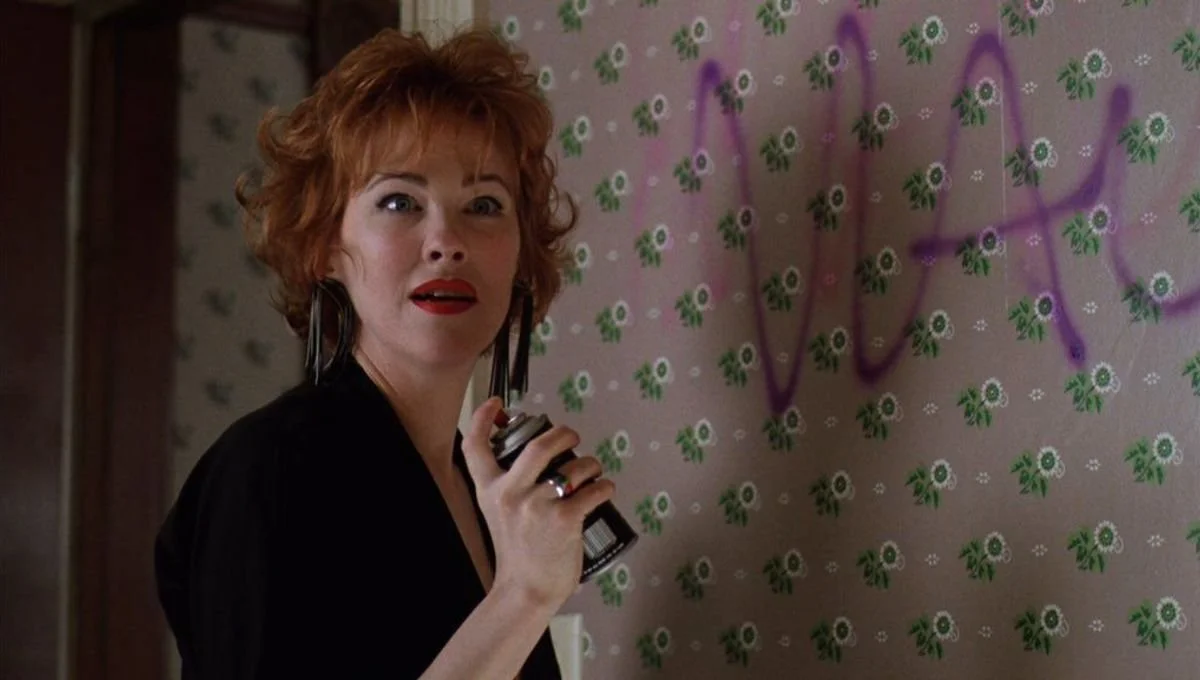
Beetlejuice (1988) and her comedic talents
Anders: As far as earlier career roles, it’s worth noting that she has a small role in Martin Scorsese’s After Hours, as an ice cream truck driver. But it’s her Tim Burton roles, particularly Delia Deetz in Beetlejuice (1988), and her voice roles as Sally in The Nightmare Before Christmas (1993) and in the later animated version of Frankenweenie from 2012, that stand out. I think that many of the things that we’ve said about her work with Christopher Guest could apply to her work with Burton too. Unselfish. Committed to the absurdity of the roles. Etc..
Anton: I have to talk about Beetlejuice, which has progressed over the years into a favourite comedy of mine. O’Hara plays Delia Deetz, an aspiring visual artist, the wife of Jeffrey Jones’s Charles Deetz (a real estate magnate), and stepmother to Winona Ryder’s Lydia Deetz. I wrote in my review from a decade ago: “O’Hara’s stepmother, with her hideous trendy ‘taste’ and an intense desperation to show off to her artsy urban friends, . . . achieves the fine line of irritation (at first) and understanding (eventually).” As with so many of her performances, O’Hara achieves a subtle balance with Delia.
Another remarkable thing in her performance as Delia is her use of smiles and looks as weapons. Delia starts off with elements of the conventionally wicked stepmother: she is exasperated with her moody goth stepdaughter, and she controls her husband with smiles and threats spoken in chipper tones. In a hilarious moment, Delia tells Charles: “I will not stop living and breathing art just because you need to relax. I'm here with you. I will live with you in this hellhole, but I must express myself. If you don't let me gut out this house and make it my own, I will go insane and I will take you with me!” It reminds me of moments in her performance in Home Alone, when the motherly, polite rage comes out when Kate is in the airport desperately trying to get back to Kevin. That edge of desperation in Delia is part of how O’Hara turns what could be a minor, flat character who is solely annoying into a richer, funnier, occasionally likeable figure.
Aren: She gives some great line readings in that film that really stand out—which is saying something when you’ve also got Michael Keaton in that movie.
Anton: Beetlejuice has a great supporting cast, and the supporting cast is no better on display than when O’Hara and Jones and others all come together in the great scene where they are possessed by Beetlejuice and made to sing “Day-O (The Banana Boat Song)” against their wills at their dinner party. O’Hara is brilliant at being able to convey a song escaping from her lips to her great surprise and consternation. It’s a great piece of comedic acting.
It was a pleasure to see O’Hara return to play Delia in the legacy sequel Beetlejuice Beetlejuice from 2024, even if that movie as a whole was not great. But it was a big hit and it was nice to see the younger generation, who ostensibly showed up to see Jenna Ortega, also embrace O’Hara. I imagine more than a few Gen-Z viewers had seen her before on Schitt’s Creek or in one of the Home Alone movies on streaming. It’s sad that Catherine O’Hara didn’t get to enjoy more years of renewed prominence. But her legacy on screen is secure.
RElated posts


Anton and Aren debate whether William Wyler’s 1939 version of Wuthering Heights is the definitive adaptation of the book.