Hot Docs 2026: The Tower That Built a City
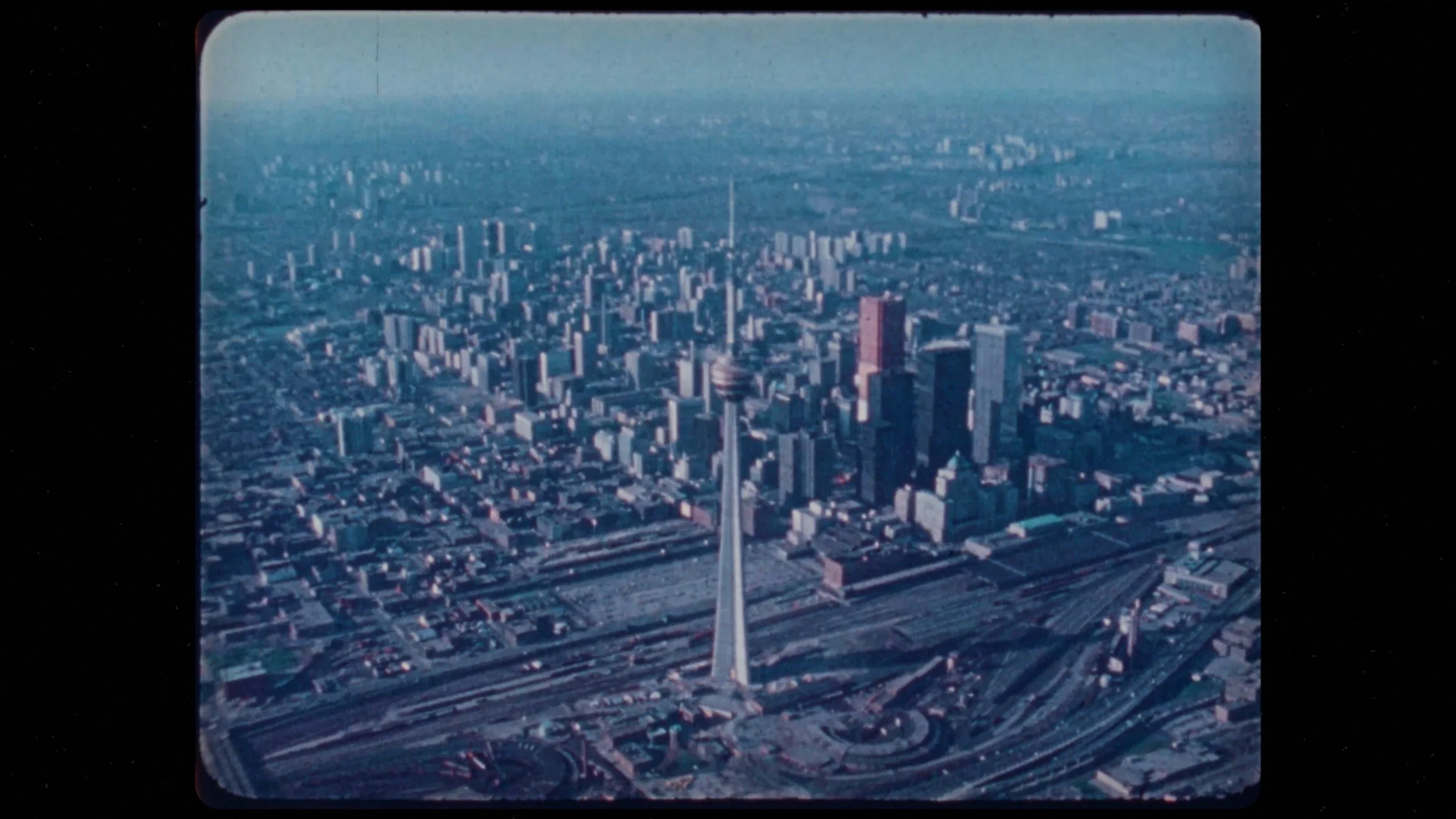
Do you want to learn about the history of the CN Tower, once the tallest freestanding structure in the world? Then I’ve got half of a fun documentary for you. The frenetically paced, pop cultural blitzkrieg of The Tower That Built a City marks the 50th anniversary of Toronto’s most enduring landmark by diving into its architectural creation and cultural impact. Sure, it blasts you with archival clips, talking head interviews, and on screen text like a social media reel, but it’s also engaging and lightweight, a sort of CanCon counterprogramming to the addictive documentaries that Netflix pumps out by the dozen. But don’t ask for much depth. This film skitters along the surface like a swallow dipping into Lake Ontario to catch bugs.
The first half, which charts the actual creation of the tower, is significantly more engaging than the second. Covering Toronto from the 1950s through to the tower opening in 1976, this part of the film features interviews with the surviving engineers and architects who worked on it as well as archival footage of its creation. We get some details about Toronto’s inferiority complex—in relation to the United States, but most especially Montreal. We get parallels between the tower’s construction and that of Montreal’s Expo 67 and Olympic stadium. Most interestingly, we get details about how the design of the tower changed from a three-prong structure to the unified concrete needle that it is today.
The filmmakers do a good job of mining the Bell archives for interesting footage (this is a production for Crave, Bell’s streaming service), so we get to see the “Toronto the Good” of the 1950s, with its modest skyline and empty rail yards along the lake. We also get to watch the actual progress of the tower going up, a feat of engineering in which the concrete was poured around the clock for eight months straight. So continuously, day by day, night by night, this concrete structure rose into the sky until it crowned the entire city, country, and continent.
And then we get to the second half where the filmmakers trot out a bewildering assemblage of interviews to discuss the city’s rise alongside the tower. We hear Canadian commentators and celebs (many of them only know to Canadians), including Steve Nash, Ron Maclean, George Strombolopoulos, Kardinal Offishall, Leo Rautins, and even, randomly, basketball writer and podcaster Alex Wong (shoutout Hello & Welcome).
It’s a random mix of interviewees, but also what you’d expect from a Canadian documentary for a general Canadian audience. Through these interviews, the film argues that the CN Tower put the city on the map and the citizens took advantage of it, especially in sports and culture. We got the Blue Jays and the Skydome and the back-to-back World Series wins in the early 1990s. We got the Raptors and Vince Carter and the 2019 Championship. We got Drake and Bieber and The Weekend. It’s convincing enough if you don’t overstate it—fit for a short form video or the brief conclusion of a doc that sums up the significance of the subject matter, but maybe not 30 minutes of a feature.
Perhaps it’s fitting for a movie that argues the CN tower was built as a towering rejection of Canadian inferiority to itself exhibit the same inferiority complex as its subject matter. The tower is a literal monolith decrying the notion that Canada is small and provincial, and the film’s grab-bag Canadian-culture boosterism showcases the same aggressively pro-Canadian message. But like most mainstream Canadian content, The Tower That Built the City has to constantly reiterate that, no, Toronto is cool, the CN Tower was important—overly eager to prove to Americans that Canada is cool, but made entirely for Canadians. It’s a fitting weakness for a film that’s very Toronto, through and through.
The CN Tower remains a relic of the 1970s—hardly the beauty of the Eiffel Tower or the Empire State Building, but charming as an encapsulation of its era. It’s also still impressive, especially when you stand underneath it on the way to a Jays game or a visit to the Metro Toronto Convention Centre. If, in that moment of gazing up at its concrete enormity, you’ve ever wondered about the history of this massive structure, you could do worse than watch this movie, its hyperactive Canadian agreeableness and all.
6 out of 10
The Tower That Built a City (2026, Canada)
Directed by Mark Myers.
Read More Reviews

Matt Bettinelli-Olpin and Tyler Gillett’s action horror sequel is a mere reheat.