Review: It Was Just an Accident (2025)
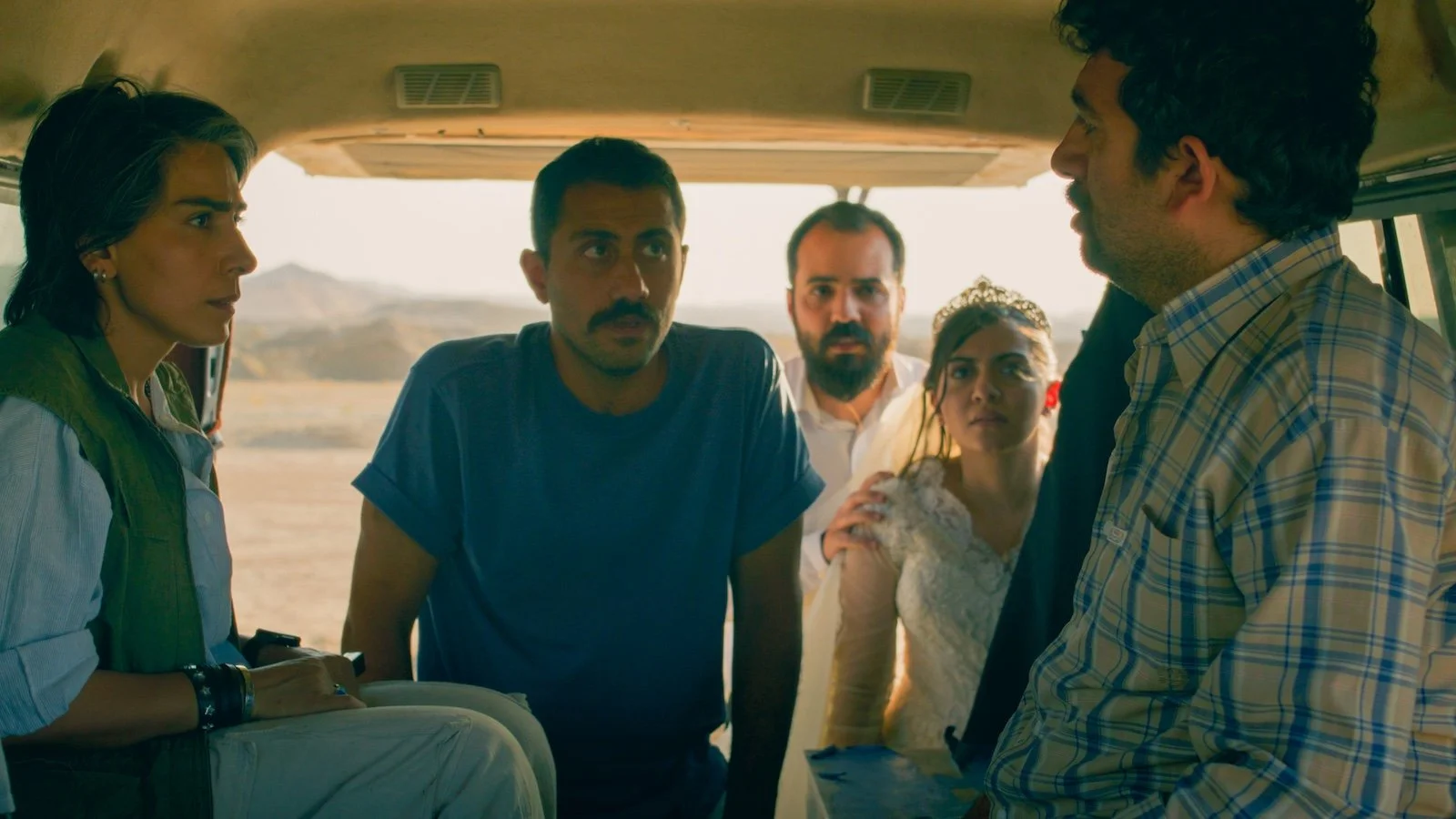

Jafar Panahi’s Palme d’Or-winning It Was Just an Accident has been pitched as a thriller in the press, and that’s true to a point. It’s tense, riveting, and moves with an undeniable pace that leaves you breathless after the remarkable final shot. But it’s a Panahi film after all, and like so many Iranian pictures, it’s never tied down by genre and plays fast and loose with fact and fiction. In It Was Just an Accident, Panahi is not blending documentary approaches into the narrative itself, but commenting on his own life in the subtext, where the scenario the characters find themselves in seems to be a dramatic reimagining of Panahi’s own torment at the hands of his authoritarian state. In an era where filmmakers love to make political statements in their work (often to the work’s detriment), it’s invigorating to watch a movie that is undeniably political but also exceptional as pure drama.
In the opening scene of It Was Just an Accident, we find ourselves in a familiar setting for a Panahi film: a car driving down a country road at night. The camera sits on the front hood on the outside of the windshield watching a middle class family driving home. While talking with his wife (Afssaneh Najmabadi) and daughter (Delnaz Najafi), the husband (Ebrahim Azizi) hits something on the road. He stops and gets out to check. Panahi’s camera swings around and follows him as he slowly walks the perimeter of the car, his prosthetic leg squeaking at the joint with each step. Finally he sees that he’s killed a dog and drags the body out from under the vehicle to the side of the road. He gets back inside and continues on his way. He remarks, placidly, to his wife that “It was just an accident” and that God must have put the dog in their way for some mysterious reason. But his daughter, crying, disagrees: “God didn’t kill the dog. You did.”
I recount this opening in detail because like the opening of many great films, this opening teaches you so much about the film. It clues us onto key aspects about the film, even if these three characters are not the central figures in the film. It teaches us what to expect visually, how Panahi’s camera will rarely cut but rather follow characters in and around vehicles with patient, intense precision. Most importantly, it contextualizes the film’s core fixation on violence and guilt, as the killing of the dog and the conversation in its aftermath become a metaphor for the film’s central event.
Soon enough, the car breaks down and the man stops in front of a mechanic’s shop, where he persuades two men to help him fix it. The one mechanic, Vahid (Vahid Mobasseri), freezes at the noise of the man’s prosthetic leg squeaking. He’s heard it before. And so he follows the man home and eventually kidnaps him, putting him in a box in the back of his van with the hopes of killing him and burying him in a hole in the desert. Vahid believes the man is “Peg Leg” Eghbal, the official who tortured him when he was in prison on spurious political charges. The man denies being Eghbal, so Vahid puts him back in the van and goes to meet with fellow political prisoners who were tortured by Eghbal. He needs to be sure he’s meting out justice on the right man before he kills him. It Was Just an Accident becomes a grand moral examination into whether there’s a threshold needed to carry out such retribution.
Like many Panahi pictures (and many celebrated Iranian pictures), It Was Just an Accident is a road picture, of a sort. Most of the action takes place in and around a car as Vahid visits with fellow former prisoners and gathers them into his van as he moves onto the next location and the next tough conversation with another person who wants retribution. Along the way we meet the photographer Shiva (Mariam Afshari), the bride-to-be Goli (Hadis Pakbaten), her fiance Ali (Majid Panahi), and Shiva’s former boyfriend, Hamid (Mohammad Ali Elyasmehr). There are elements of Panahi’s own Taxi (2015), which follows a taxi driver and the deep conversations he has with the various people he picks up throughout the film, as well as Abbas Kiarostami’s road pictures, including the Koker trilogy film Through the Olive Trees (1994). The bickering couple of Goli and Ali even recalls the engaged couple of that film, such that it almost seems a deliberate reference (Panahi was Kiarostami’s assistant director on that picture).
The narrative is something of a picaresque, as when we meet these characters, we’re pulled into their domestic disputes which act as distinct episodes. The topic always circles back to what Peg Leg has done, the ruin he has wrought on these people, with intense conversations about what is justified and even what is practical now that Vahid has kidnapped the man in the first place. It all leads to an intense, frenzied interrogation sequence to end the film that’s likely the scene of the year. The moral intensity of It Was Just an Accident is exhausting and illuminating by film’s end, but the journey there is not all darkness. Much of the film is hilarious as we watch the characters clash with each other in clumsy, emotional ways or see the characters run up against the more petty abuses of the Iranian governmental and social system, such as when Vahid has to bribe two security guards. When he tells them he doesn’t carry cash, they don’t miss a beat, pulling out a card reader so he can make a bribe at his own convenience.
The seething anger at the heart of the film is fuelled by Panahi’s own artistic battle against the Iranian authorities, who have sought to imprison him and ban him from filmmaking over the years—all for nought. But Panahi is too clever and too interested in people to let the film wallow in its righteous anger. Rather, Panahi’s own passion fuels the characters’, the precision of his filmmaking steering the clarity of the storytelling. It Was Just an Accident becomes Panahi’s passionate statement on the moral impossibility of satisfying retribution, and his indictment of his home that he loves so dearly.
9 out of 10
It Was Just an Accident (2025, Iran/France/Luxembourg)
Written and directed by Jafar Panahi; starring Vahid Mobasseri, Mariam Afshari, Ebrahim Azizi, Hadis Pakbaten, Majid Panahi, Mohamad Ali Elyasmehr, Delnaz Najafi, Afssaneh Najmabadi, Georges Hashemzadeh.
Read More Reviews
The History of Concrete is like a feature-length version of an episode of How To with John Wilson.