Christmas: The Holly and the Ivy (1952)
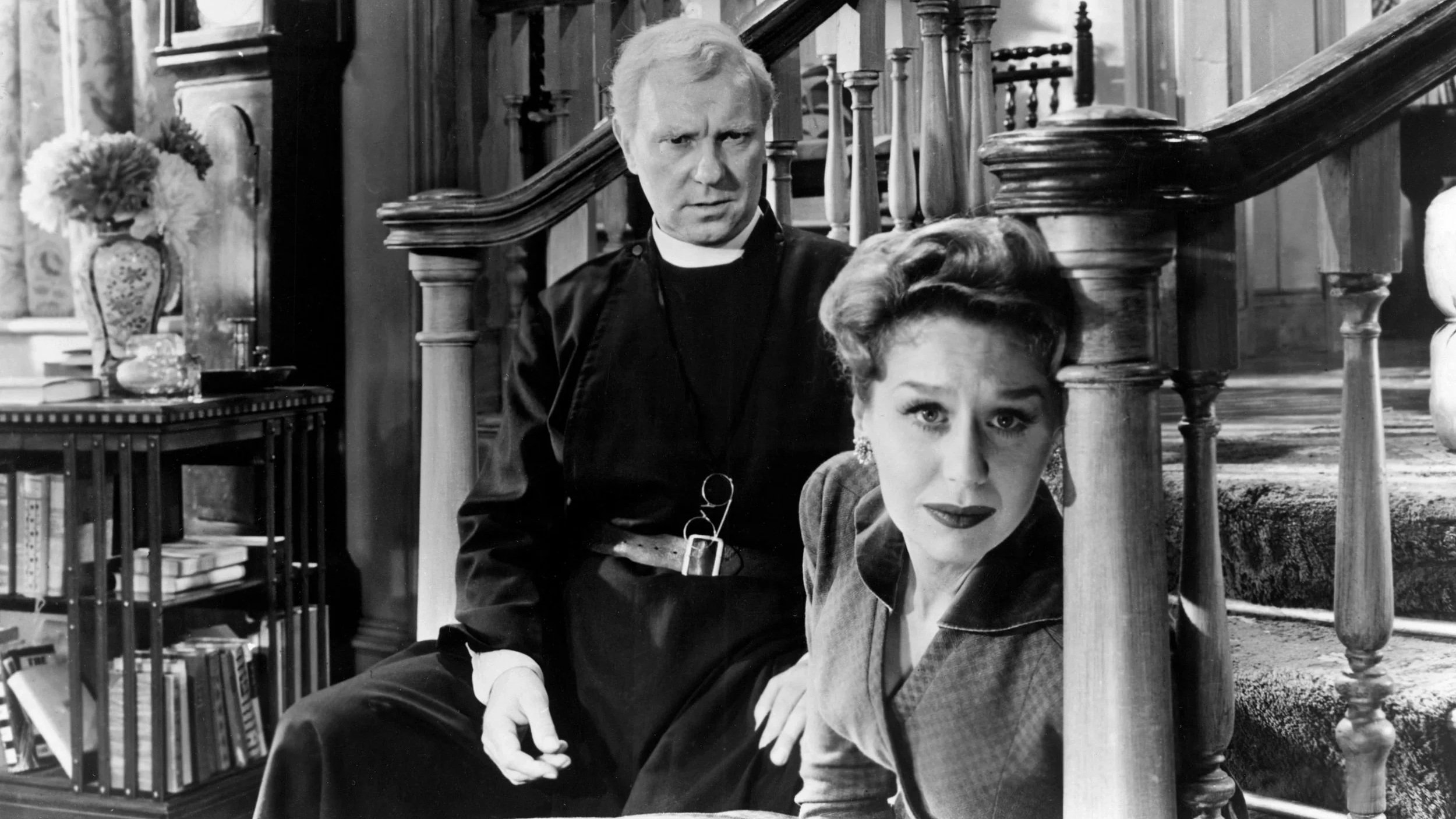

The Holly and the Ivy, which takes its name from the iconic carol, is based on a 1950 stage play and stars a series of classic British actors, including Ralph Richardson (Long Day’s Journey into Night), Celia Johnson (Brief Encounter), and a young Denholm Elliot (Indiana Jones). Why had I never heard of this film before watching it on Kanopy one evening? Perhaps because it’s so obviously theatrical, with a sombre tone, confined setting, and subtle camerawork. Perhaps it lacks the cloying sentiment that has made many other older Christmas movies mainstays on cable. Or perhaps it’s that The Holly and the Ivy is too interested in notions of faith and grace to have much staying power in the modern day. Regardless of the reason, it’s too bad that this film doesn’t have a stronger profile amongst Christmas movies as it is a touching, wonderfully performed family drama.
The Holly and the Ivy follows the various members of the Gregory family who all gather in the village of Wyndenham, Norfolk for Christmas. There’s the patriarch, Martin (Ralph Richardson), a kindly parson who is so devoted to his parishioners that he’s oblivious to his own children’s struggles. There’s Jenny (Celia Johnson), the eldest daughter who has sacrificed her own ambitions to take care of Martin in Wyndenham. There’s Margaret (Margaret Leighton), the middle child who has a successful career in London, but who struggles with personal demons. There’s Michael (Denholm Elliot), the impulsive youngest child and a gunner in the army. There are also two elderly aunts, Lydia (Margaret Halstan) and Bridget (Maureen Delany), as well as the children’s godfather, Richard (Hugh Williams), and Jenny’s boyfriend, David (John Gregson).
All these disparate, somewhat estranged individuals gather in the rural home on Christmas Eve and slowly, over the course of the holiday, have it out with regards to their pasts, their ambitions, and their familial duties. There are arguments throughout The Holly and the Ivy, but befitting the Britishness of the characters, the disagreements are not blowout arguments or contentious fights where all the bile of decades pours forth with abandon, like in an Edward Albee play. Rather, the confrontations are subdued, built around passive aggression or comments not made rather than direct antagonism. The script by Anatole de Grunwald and Wynyard Browne (based on his 1950 play) is uniquely British in this way. It’s also perceptive in examining how all the characters are defined by what they perceive others think of them rather than what is actually thought of them.
For instance, Jenny assumes that Margaret thinks she’s happy with her domestic station in life, while Margaret assumes Jenny thinks she’s a dilettante. The characters don’t actually argue with each other as they are, but rather ideas of who they are, meaning they’re always talking sideways at each other, missing the true point of a disagreement. This approach is best embodied in Martin, who constantly talks about how his parishioners are so caught up in the modern world that they only go to church out of habit and dying obligation rather than a rich engagement with faith and the world around them. This comment is deeply ironic as Martin is so fixated on serving his self-absorbed parishioners that he has essentially ignored the emotional and spiritual development of his own children.
Director George More O’Ferrall was best known as a TV director and so the film doesn’t have the sort of visual flair that you’d get in other British films of the period directed by David Lean or Michael Powell and Emeric Pressburger. But he is a sure hand at controlling the pacing and directing the performances, ensuring they stay within the bounds of frame and don’t get too theatrical, despite the limited staging of the material. Running only 83 minutes, The Holly and the Ivy is an easy watch, despite the heaviness of some of the narrative turns. Like other films of the period such as Powell and Pressburger’s The Small Back Room (1949), it goes to dark places in its exploration of depression and post-war trauma. That said, it’s still a Christmas film, so there’s light in the darkness, which isn’t always the case in other post-war films.
Notably, the film engages with the concept of faith and faithfulness, both to your ideals and to the people around you. A late speech by Richardson perceptively highlights the break between the good you think you’re doing and the good others actually experience, which elegantly illuminates why faith and works are considered essential and inseparable within the letters of St. Paul. What does it mean to live a good life if your conception of goodness never affects the people around you in the manner they need? Is faithfulness about pantomiming what is right or about genuinely reacting to the needs you witness around you?
The Holly and the Ivy highlights the ways the holidays, by increasing our interactions with loved ones, often expose our fractures, as a unit and as individuals, and how the grace and promise of Christmas provides a chance for genuine reconciliation and growth. It’s a touching film and a reminder that, once-upon-a-time, movies about Christmas were capable of genuine substance and insight, with only passing gestures at the platitudes and sentiment of the season.
9 out of 10
The Holly and the Ivy (1952, UK)
Directed by George More O’Ferrall; written by Wynyard Browne and Anatole de Grunwald, based on Browne’s play; starring Ralph Richardson, Celia Johnson, Margaret Leighton, Denholm Elliott, John Gregson, Hugh Williams, Margaret Halstan, Maureen Delany.
Read More Reviews
Alexander Ullom’s high-concept debut feature conjures an existential nightmare.