Review: Wicked: For Good (2025)
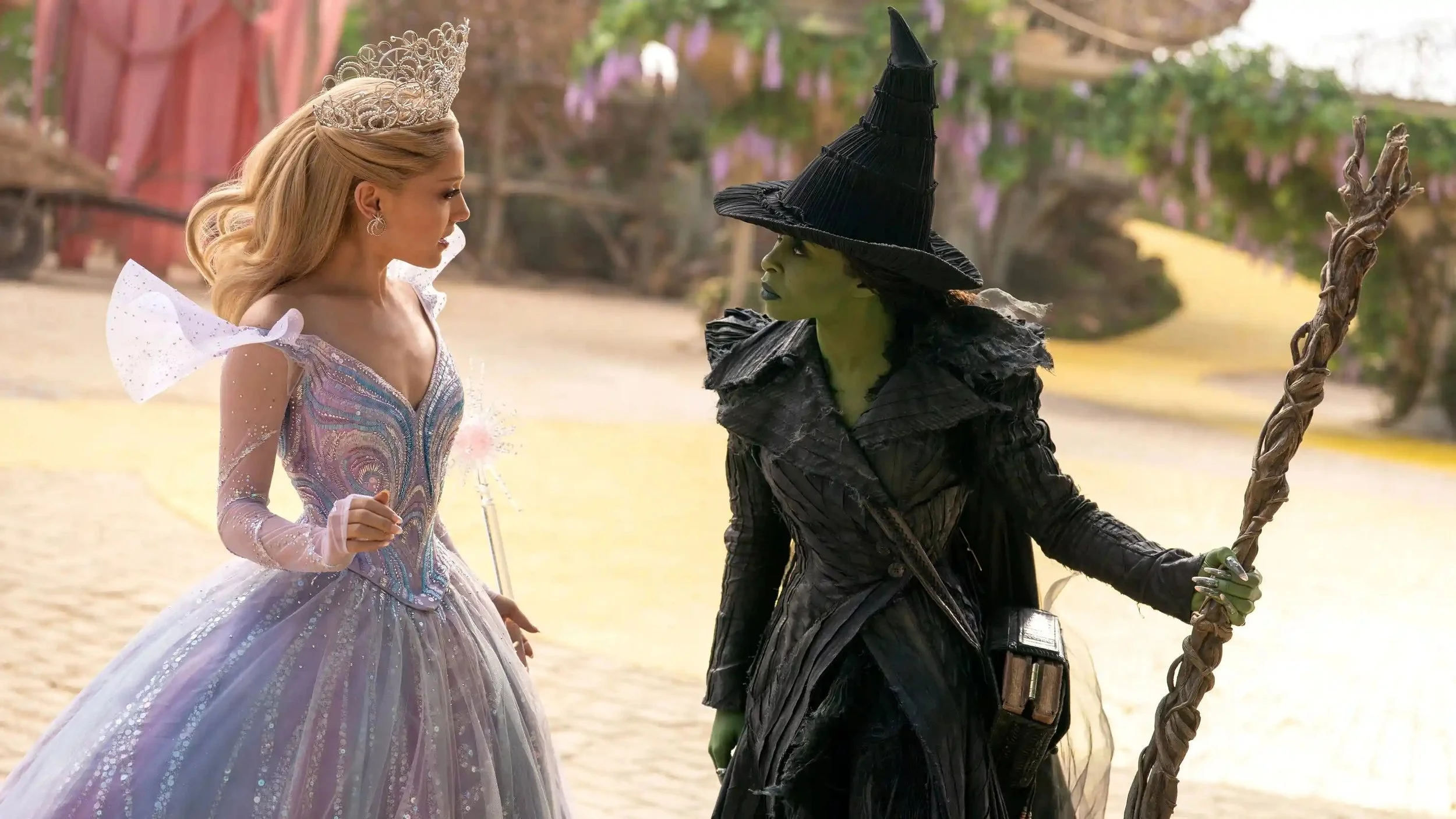

As the second act of a stage musical stretched to 137 minutes, Wicked: For Good was doomed to fail as a standalone film. The narrative arcs are forced, while other plot elements are strangely truncated. The songs never reach the highs of “Popular” or “Defying Gravity,” while emotional payoffs lack the momentum built over the lengthy first movie, which was based on Act 1 of the musical. There’s simply not enough here to make it work on its own, and some of what is here is rather baffling. All that said, Wicked: For Good feels very much of a piece with the first film: the problem is that it is so obviously the second piece. The movie remains a decently entertaining blockbuster sunk by its structure.
As someone who thought the first Wicked was OK, but simply too long for its own good, I’m a bit baffled by people who loved the first film and hate the second. This film shares the fundamental weakness of its predecessor, but also many of the same strengths, namely the music and the verve of the performers. Wicked: For Good is not a success, but it is fairly entertaining on its own terms.
Wicked: For Good catches us up a year after the events of the first Wicked. Elphaba (Cynthia Erivo), now known as the Wicked Witch of the West, seeks to stymie the plans of the Wizard of Oz (Jeff Goldblum) while remaining in the shadows. Her former best friend, Glinda (Ariana Grande), has become the core spokesperson for the Wizard’s regime and supports his propaganda efforts, even as she and prince Fiyero (Jonathan Bailey) secretly search for Elphaba and long to make things right.
As in the previous film, the core appeal is the performances. Aside from some wonky acting by Jeff Goldblum and Michelle Yeoh (and the less said about Bowen Yang, the better), these movies are generally well cast, especially in the core three leads. Erivo is again a steady lead using her voice and her theatrical emotionalism to keep the film afloat. Jonathan Bailey is again charming as the love interest, Fiyero. But Grande is the standout.
Wicked: For Good is more Ariana Grande’s film than the first one and considering she’s the best part of these movies, it’s to the film’s benefit. Grande gets the first credit and Wicked: For Good charts Glinda’s transformation from self-deluded pawn of the Wizard to seemingly benevolent ruler and liberator in the closing moments. It’s not the most elegant transformation from a plot construction, but Grande makes it work emotionally, carefully dropping her impeccable poise at moments to allow us to witness her internal conflict and emotional growth. Grande still does her hair flips and forced smiles for the crowds of Oz, but we often see her let her hair down, so to speak. I continue to be surprised by her as a performer; she truly is not what I expected when I heard she would star in these movies.
What’s also better than in the previous film? We get less of the interminable worldbuilding, with its incoherent politics and metaphors about animal rights and fascism. The Wizard of Oz’s authoritarian plan to scapegoat the animals of the realm is still in progress here, and we get a few glimpses of Elphaba’s resistance against said plan, but there’s precious little of the speechifying that sank whole sections of the previous film. Any of the political implications of the first film are dropped in favour of resolving personal vendettas and, while not profound, they provide a more focused experience than the first film.
However, For Good is not a wholesale improvement on Wicked. Much of it is questionable. Most fatal is that the movie, like the musical before it, makes the unfortunate decision to loop in the events of The Wizard of Oz, with origin stories for the Tin Man, the Cowardly Lion, and the Scarecrow, and fleeting glimpses of Dorothy. Wicked had the benefit of being novel, even if it’s clearly inferior to the original The Wizard of Oz. Wicked: For Good brings elements of The Wizard of Oz into its narrative, making its deficiencies all the more evident by comparison, since we’re constantly reminded of the magic of the 1939 movie whenever For Good does a variation on its events.
The variations on the events of The Wizard of Oz are also occasionally deranged. For instance, the creation of the Tin Man is played for some kind of body horror, transforming one of the more delightful characters of the previous film (I won’t say who) into a metallic monstrosity. Later, as Dorothy and her crew visit the Emerald City, the Tin Man spouts his vengeful hatred of Elphaba in a baffling proclamation that is never paid off. Moments like this one play like sour notes left hanging after the accompanying music has ended, unfortunate reminders that not everything is in harmony here.
These sorts of moments also remind us that the entire Wicked project is the more incoherent the more you prod it. What are the thematic takeaways? What are the grand revisionist proclamations about the land of Oz? What are we supposed to think of the ending, which seems to embrace the notion of the noble lie without any complication? Wicked only makes sense on the personal, emotional level of the characters, not on the level of the world or its themes. This is fitting since it succeeds based on the individual performances and the personal emotions of the music, but flounders when it tries to make larger comments about society. Like so many modern musicals, it lives with the songs and the performers that sing them, and dies with the silliness of what surrounds them. There’s ultimately too much surrounding these elements in this stretched-out Act 2.
5 out of 10
Wicked: For Good (2025, USA)
Directed by John M. Chu; written by Winnie Holzman and Dana Fox, based on the musical by Stephen Schwartz and Winnie Holzman, based on the novel by Gregory Maguire; starring Ariana Grande, Cynthia Erivo, Jonathan Bailey, Ethan Slater, Bowen Yang, Michelle Yeoh, Jeff Goldblum.
Read More Reviews
The History of Concrete is like a feature-length version of an episode of How To with John Wilson.