Review: Muppet Treasure Island (1996)
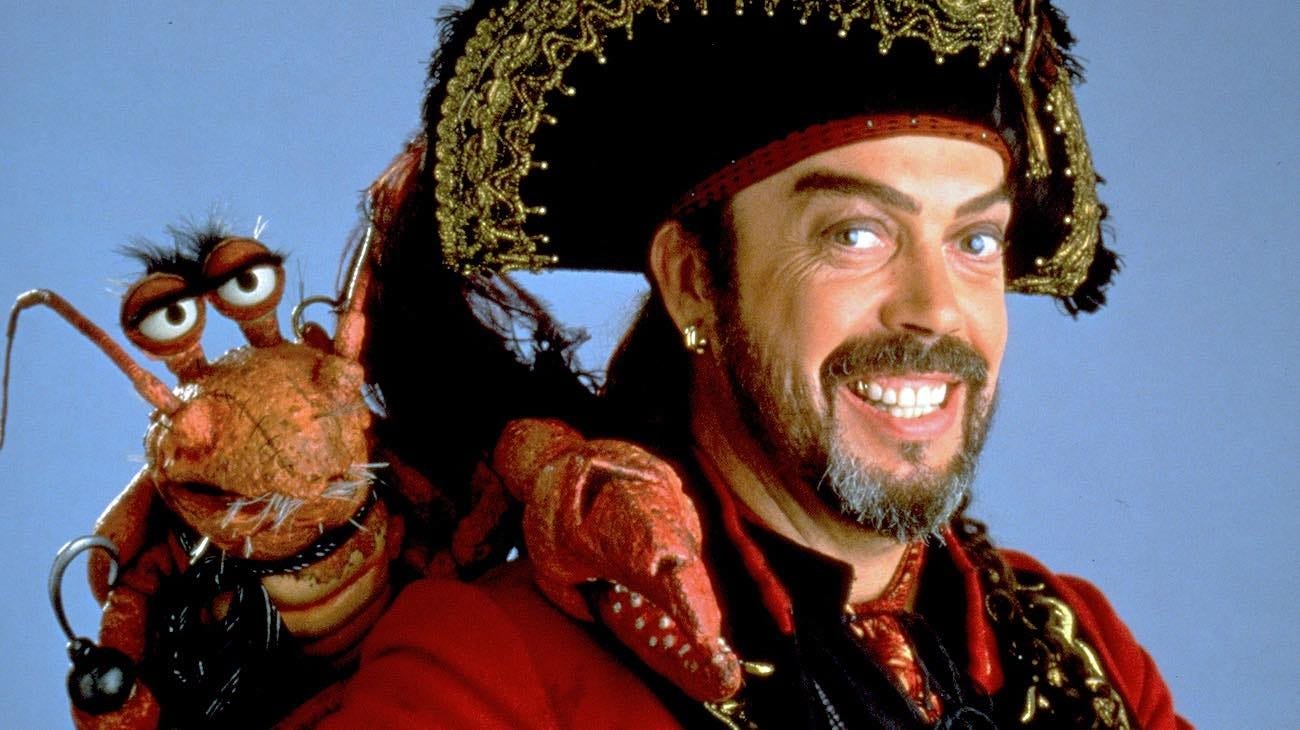

Gen-Xers and older Millennials nostalgic for “Rainbow Connection” and Kermit the Frog riding a bicycle probably won’t agree with me, but my favourite Muppet movies are the two playful adaptations of literary classics directed by Jim Henson’s son, Brian, in the mid 1990s. My brothers and I have long appreciated the first of these, The Muppet Christmas Carol (1992), praising it in our roundtable discussion as both a great Christmas movie and a solid adaptation of Dickens. I’ve come to more fully appreciate the second, Muppet Treasure Island (1996), only in recent years. A rewatch of Muppet Treasure Island after the recent passing of Tim Curry—who plays the cook/pirate Long John Silver and is the principal human on screen in this Muppet movie—solidified my enjoyment of this film. It also enhanced my appreciation of both films, viewing them as companion pieces. Both films have everything you could want in terms of Muppet fun—the silly gags and smart jokes, the intelligent references and parody, the solid musical numbers, the incredible puppetry and craft—but the two films have the added benefit of building on the solid narrative bones of a literary classic.
Just as The Muppet Christmas Carol is an astute adaptation of Dickens’ novel, so too is Muppet Treasure Island a capable, albeit playful and at times very loose, adaptation of Robert Louis Stevenson’s Victorian pirate novel for boys. Nowadays it is easy to forget that Stevenson’s 1883 novel (as well as the 1950 Disney adaptation of it) basically invented what we think of when we think of pirates today—the pet parrots, eye patches, and peg legs, the maps to desert islands and buried treasure, the elaborate pirate codes, saying “Yar,” and things like that. The script mines Stevenson’s pirate conventions for humour, such as with the “black spot,” the pirate mark of death.
Orphan Jim Hawkins (Kevin Bishop) is a scullion boy at a seaside inn, along with his friends, Gonzo and Rizzo the Rat. Billy Bones (played by Billy Connolly) is an old drunk and storyteller who hangs around the inn, but he claims to have been the first mate of the notorious pirate, Captain Flint. When a band of his old pirate shipmates show up looking for Billy’s map to Flint’s buried treasure, Jim and his two Muppet pals find themselves thrown into the adventure that Jim has always longed for. With the treasure map in their possession, they will eventually recruit the help of the rich Squire Trelawney, here played as an idiot by Fozzie Bear, as well as Kermit the Frog’s Captain Smollett (whose hilarious entrance alone makes the film worth watching). Poor simple Trelawney talks too much about the quest for treasure and he lets the cook, Long John Silver, recruit most of the crew, and so, as you know, trouble will arise when they hit the high seas.
Muppet Treasure Island goes through most of the important beats of the book, especially from the first half. As with The Muppet Christmas Carol, the film at times playfully engages with knowing adults in the audience—for example, most of us adults will know Silver is up to no good and that the crew are secretly pirates, and Miss Piggy’s later account of her exes gestures towards some adult humour. But the story also functions more straightforwardly for the children watching. In certain ways, Brian Henson is arguably a sturdier director than his father and other earlier directors of Muppet movies, keeping the narrative more central to the proceedings, or at least timing the humorous tangents so that they come quickly back to the main plot.
While I personally like the idea of the Muppets playacting as characters from famous books, what puts both Muppet Treasure Island, alongside The Muppet Christmas Carol, over the top of the other Muppet movies for me is their incredible look and design. There are of course the marvellous main Muppets—such fully formed personalities!—but there’s also the attention lavished on small, tiny, unnamed puppets, often off to the side of things. And although the Muppets are justifiably the main show, the sets in these two literary adaptations are also incredible. At times, they are expressionistic, with the inn at the start of the movie having the same distorted angles as London’s buildings in The Muppet Christmas Carol (or the houses in The Cabinet of Dr. Caligari). The ship, the Hispaniola, looks and feels like a real ship—or at least the kind of real physical replica you might board and play on at Disneyland (or West Edmonton Mall). Henson also has a knack for shooting the expressionistic sets and peculiar characters’ faces from canted angles, giving everything a strange slant, emphasizing the bizarreness of the world on screen (including its central blend of human and puppet). It’s as if the inspiration was not just his father’s trilogy of Muppet movies from the 1980s, but also his two ventures into dark fantasy: The Dark Crystal (1982) and Labyrinth (1986).
The film opens with perhaps the standout scene of puppetry and motion picture art in the movie, a musical number, “Shiver My Timbers,” showing Flint burying his treasure on the island and ending off with confirmation that “dead men tell no tales.” The whole thing is revealed to be Billy Bones’s narration, but the thrumming song is shot strangely, with the bloodred sunset tinting all the visuals in a sinister way. Singing Easter Island-like statues and skeleton-head Muppets join in the song, giving things at times a bizarro vibe.
The film’s oscillation between parodic humour and some darker insinuations is no better expressed than by Tim Curry in the lead human role. Stevenson’s Long John Silver is famously a charismatic villain, and one complex enough to be genuinely ruthlessly evil (not just misunderstood) yet still fond and protective of Jim. Curry plays him with a sly creepiness throughout, both with his voice and his large eyes and lips. He’s so friendly that you want to chuckle with him, but you always sense his darker side. Curry’s magnetism helps make up for the fact that the lead boy, Kevin Bishop, is fairly dull as Jim. But even in the book and older film adaptations, Jim is the straight man, the ordinary boy thrust into his adventurous surroundings. For the songs, Curry deploys an operatic tenor, and his eyes are constantly mugging, showing the audience that he continually gets that he’s in a funny movie. It’s the opposite approach of Michael Caine in The Muppet Christmas Carol, in which Caine gives a performance that is so dedicated you feel like reminding him, “Hey, these are just puppets.” Curry, on the other hand, catches every occasion to play to the audience. Both approaches, while distinct, work in their respective movies.
Muppet Treasure Island is also distinct from The Muppet Christmas Carol in that it lacks the earlier film’s most successful narrative device: having Gonzo and Rizzo be the narrators (Charles Dickens and Rizzo the Rat). Although Muppet Treasure Island is still playful with its self-reflexivity and anachronisms—none funnier than the running gag of Rizzo selling all-inclusive tickets to rats, who accompany the sea voyage like modern people on a tropical cruise vacation—but it lacks the constant meta-layer that enriches The Muppet Christmas Carol as a whole. But this also owes to the different narrative tones of the source books. Dickens’ narrator has a much stronger presence in his novel than Stevenson’s.
While I’m comparing Muppet Treasure Island to The Muppet Christmas Carol, I will note that in contrast to Christmas Carol, Treasure Island’s story largely dissolves into Muppet matters by the end of the movie. Christmas Carol succeeds marvellously—and is a legitimately great Christmas movie—because it is as satisfying narratively and emotionally as any other adaptation of Dicken’s story. Muppet Treasure Island’s resolution is less satisfying emotionally because it doesn’t want to become the careful, strategic, small-scale battle story that the book turns into, where it’s all about securing the guns and powder and seeing which small band can defend and fight off the others on the island. Understandably, this Muppet movie does not want to become an action movie, and so it pivots to more humour and music.
The most prominent Muppet addition to the portion of the narrative set on the island is the presence of Miss Piggy, who otherwise wouldn’t have a role in Stevenson’s male-centric story. It turns out that Piggy is Smollett’s long lost love, who found her way to the island and has become a kind of god to the island’s native inhabitants (a tribe of pig Muppets). After its grand and dedicated set up, her entrance is hilarious and shows that the entrance of Johnny Depp in Pirates of the Caribbean: Dead Man’s Chest might owe more than a nod to this earlier pirate movie.
If you think my second mention of Pirates of the Caribbean is overblown, then I’ll make a third, a connection which is undoubtable. Hans Zimmer did the score for both movies, and certain melodies and themes here seem to prefigure aspects of his famous Pirates of the Caribbean scores. Muppets Christmas Carol was scored by Miles Goodman with songs by Paul Williams; this has a score by Zimmer, with songs by Barry Mann and Cynthia Weil. Both are great scores!
Muppet Treasure Island was the second Muppet movie produced by the Walt Disney Company (before they acquired the Muppet IP in the early 2000s). Disney’s Treasure Island from 1950, directed by Byron Haskin, was the company’s first full-length live action adventure, and I’ve written elsewhere about how 2003’s Pirates of the Caribbean: The Curse of the Black Pearl, was a serendipitous rebirth of the Disney live action adventure. Now perhaps we should slot Muppet Treasure Island into the story about Disney and pirates on screen. What’s more, the film’s parody of onscreen pirates likely plays even better for children today than in 1996, in a movie world with the Pirates of the Caribbean franchise comfortably established.
The following Muppet film, Muppets from Space (1999), while working as an extraterrestrial investigation parody, lacks the literary source material to ground the proceedings. It’s fun but less memorable. But in that film’s grandiose opening dream sequence—showing Gonzo being turned away from Noah’s Ark—we see vestiges of these two earlier Muppet films. There are the same lavish sets and design, the charitably humorous play with the classic source material, and the overall commitment to the story world these strange puppets are set to inhabit.
It was a bold venture to place the Muppet troupe in adaptations of literary classics, but even with their second go at it, the venture paid off.
8 out of 10
Muppet Treasure Island (1996)
Directed by Brian Henson; screenplay by Jerry Juhl, Kirk R. Thatcher, and James V. Hart; starring Tim Curry, Kevin Bishop, Billy Connolly, Jennifer Saunders, Dave Goelz, Steve Whitmire, Frank Oz, Jerry Nelson, Kevin Clash.
RELATED POSTS

The History of Concrete is like a feature-length version of an episode of How To with John Wilson.